
This post may contain affiliate links.Please read our disclosure policy.
German goulash (Rindergulasch) is a rich, paprika-braised stew loaded with melt-in-your-mouth tender beef and flavorful vegetables. A Bavarian classic, made from scratch just like my Oma made it.
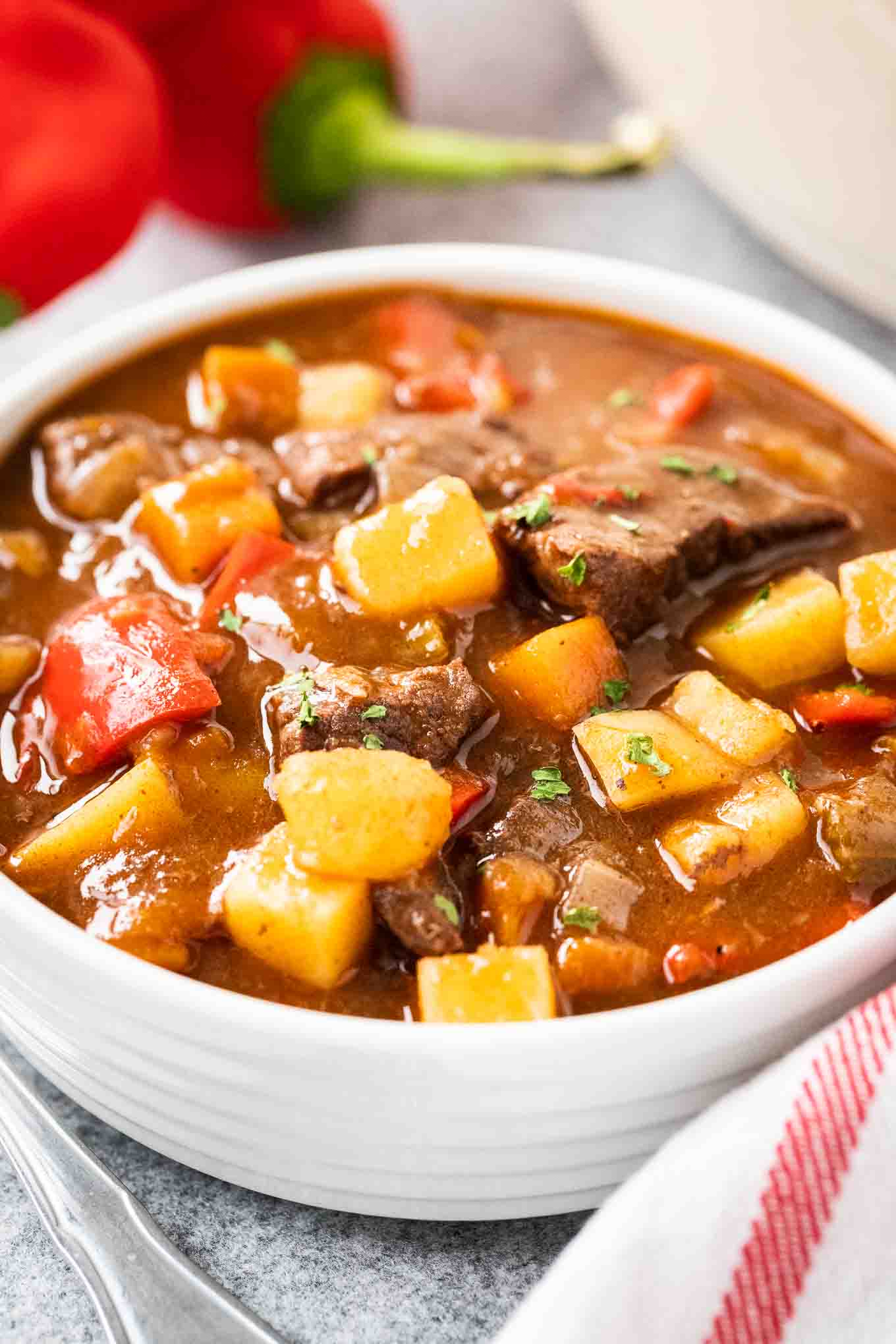
This comforting beef goulash recipe is the perfect meal for cold weather that the whole family will love! It is a braised beef dish slow-simmered with onions, red wine, and spices until the meat is completely tender and the sauce is glossy and full of flavor.
Back home in Bavaria, Rindergulasch is also a popular food for parties. We often have it for birthdays or other gatherings because it can be made in advance and gets even better overnight. Guests usually bring salads, and then the goulash is served with crusty bread on the side. Everyone always loves it!
Looking for more comfort food? Try our Cheese Spaetzle, Kaiserschmarrn, and Easy Potato Bacon Soup!
Why you’ll love this recipe
- Genuinely authentic. This is Rindergulasch as it’s made in German home kitchens, with the right spices and technique.
- Perfect for a crowd. Make it a day ahead, and it tastes even better. No last-minute cooking.
- Flexible serving options. Add potatoes or serve over spaetzle, rice, Mehlspatzen, or with bread.
- North American kitchen-friendly. Every ingredient is easy to find.
- Freezes beautifully. A batch now means dinner later with almost no effort.
Ingredient Notes
Here is an overview of the ingredients you’ll need for this recipe. Scroll down to the recipe card at the bottom for quantities.
- Onions – For this recipe, you need equal parts beef and onion by volume. The onion almost dissolves in the sauce during cooking and creates the base of the flavor. Do not reduce them.
- Celery – Many German goulash recipes use celery root instead of celery stalks. I have a hard time finding celery roots at the supermarket, so I often use celery stalks.
- Paprika – I prefer to use Hungarian paprika for this recipe because it is more flavorful than standard paprika, but you can use sweet paprika too. For a bit of heat, feel free to add some hot paprika or cayenne.
- Red Wine – You need one cup of red wine. Any red wine works for this recipe. I always recommend using what you would also drink. If you can’t use red wine, you can use more beef broth.
- Beef – I use stewing beef for this recipe, but you could also use a chuck roast cut into cubes. If the chunks of beef are too large or unevenly sized, I recommend cutting them into smaller, even chunks.
- Spices – This recipe uses standard seasonings (bay leaves, black pepper, and salt), but it also uses dried marjoram, a traditional German goulash herb that adds a subtle floral, earthy note. You can find it in any supermarket spice aisle
Bavarian Variation: Beer Instead of Wine
In Bavaria, it’s common to use dark beer instead of red wine. Use a dark lager or Märzen-style beer. The result is slightly maltier with a less pronounced acidity but still deeply flavored. You often get this version in a traditional Gasthaus, especially if they are associated with a brewery.
German Goulash vs. Hungarian Goulash
Both start with beef, onions, and paprika, but they’re not the same dish. Hungarian goulash (gulyás) is thinner, closer to a soup, and usually contains potatoes, carrots, and bell peppers. No wine. German goulash is thicker, richer, and eaten as a sauce over a starch like spaetzle or dumplings. Sometimes it is also called “Ungarisches Gulasch” (Hungarian Goulash) in Germany, but it is still the German version.
Growing up in Bavaria, I never thought much about the distinction. It was just Gulasch. What I did notice was that ours was always made with red wine and, occasionally, depending on who was cooking, with dark beer instead. That beer version has a slightly maltier depth to it and is common in Southern Bavaria.
If you see Gulaschsuppe on a German menu, that sits somewhere between the two: a hearty goulash soup, thicker than Hungarian gulyás but thinner than what you’d serve over Spaetzle.
Expert Tips for success
- Brown the beef properly. This step is not optional if you want deep flavor. Dry the meat before it goes in the pan and work in batches. A crowded pot gives you grey, steamed beef, not browned.
- Use real Hungarian paprika. For the best flavor, use Hungarian paprika or quality paprika. Check expiration dates. Old paprika has almost no flavor.
- Don’t burn the paprika. It goes in off the high heat and cooks for seconds, not minutes. Burned paprika is bitter.
- No red wine on hand? Substitute with additional beef broth. The dish will be slightly less complex but still good.
- Simmer low and slow – Let the goulash simmer for two hours at a low temperature so the meat gets tender. Some tougher cuts might need longer to get tender. Don’t boil it! Boiling toughens the meat.
- Taste before adding the cornstarch. The sauce may have reduced enough on its own. Only thicken if you need to.
Add-ins for German Goulash
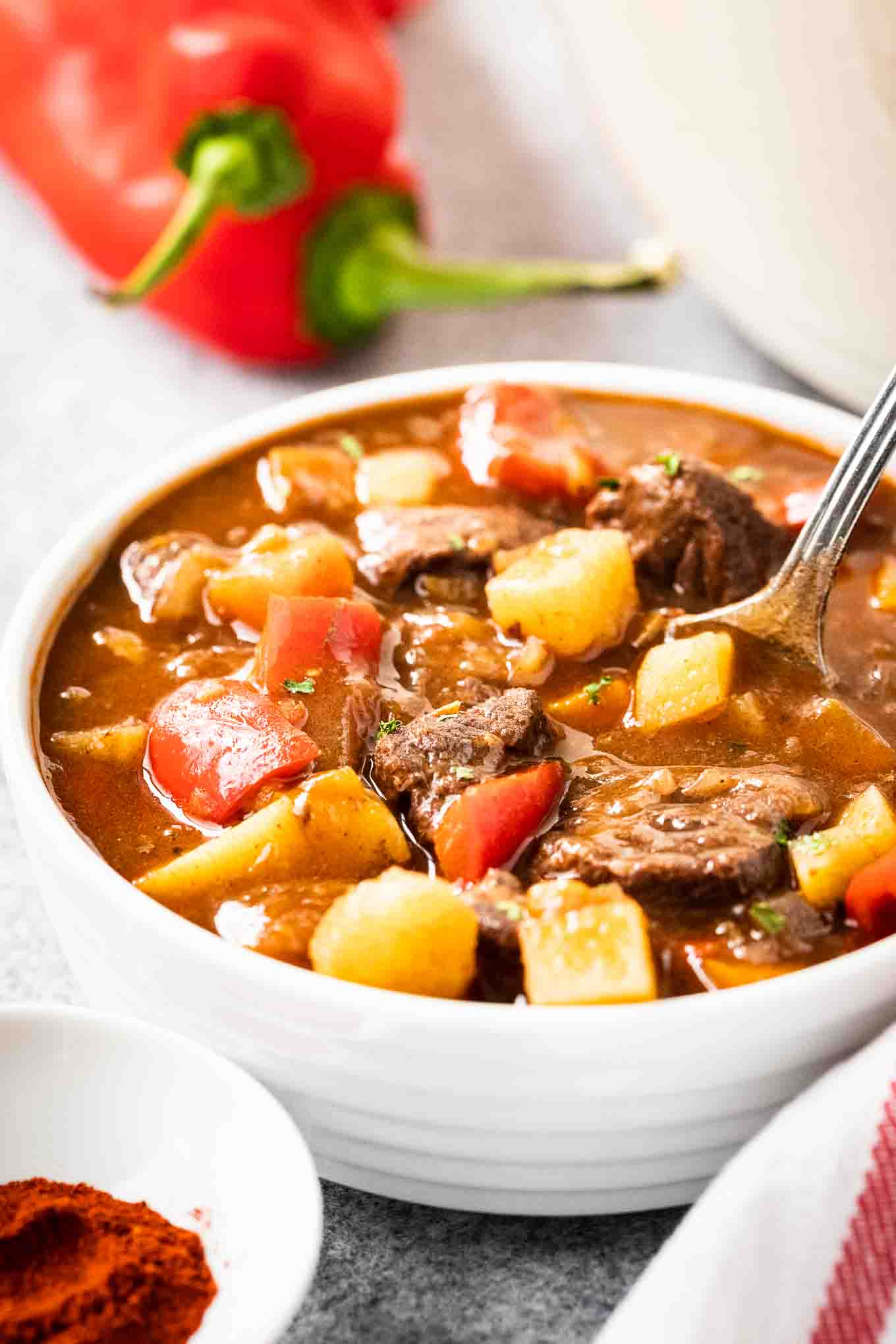
In Germany, we often add other ingredients to our goulash. A popular variation is Rindergulasch mit Paprika (beef goulash with bell peppers), but my family also often adds potatoes because it is the easiest way to transform this simple beef stew into a full meal, and it is perfect for feeding a crowd!
- Bell Pepper – Add 3 red bell peppers, cut into 1-inch pieces, 30 minutes before the cooking time is over.
- Potatoes – Add 2 cups of cubed potatoes 30 minutes before the cooking time is over
- Heavy Cream – Add 1/4 cup heavy cream at the end of the cooking time for a richer, creamier sauce.
- Other add-ins – Other veggies cut into small pieces or crispy bacon bits
What to serve with it
German Goulash is always served over or with a starch, not on its own. Traditional options from Germany:
- German Potato Dumplings (Kartoffelklöße, traditional in Bavaria)
- German Bread Dumplings (Semmelknödel): My favorite
- Rice
- Spaetzle or Mehlspatzen
- Noodles or pasta
- Bread (especially if making it party-style without potatoes in the goulash itself)
A simple German cucumber salad (Gurkensalat) or Blaukraut (German red cabbage) alongside rounds out the meal well.
Leftovers
Make-ahead: German Goulash is best made one day in advance. The flavor improves significantly overnight. This is the practical reason why it was always the birthday party dish growing up: everything was done before guests arrived.
Refrigerator: Store leftovers in an airtight container for up to 4 days. Reheat the goulash over low heat until hot.
Freezer: Freezes well for up to 3 months. Let it cool completely before transferring it to a freezer-safe container. Thaw overnight in the fridge or reheat directly from frozen. We often make a big batch and freeze multiple portions for days we need something quick.
More German dinner ideas
German Recipes
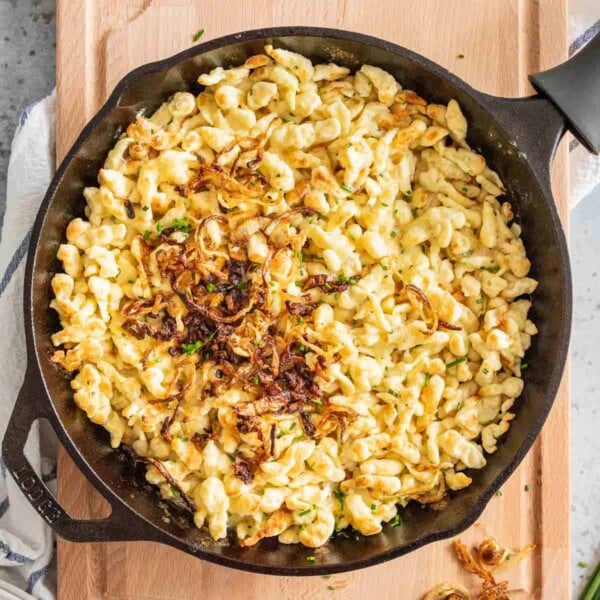
Cheese Spaetzle Recipe

Main Dishes
German Schnitzel
German Recipes
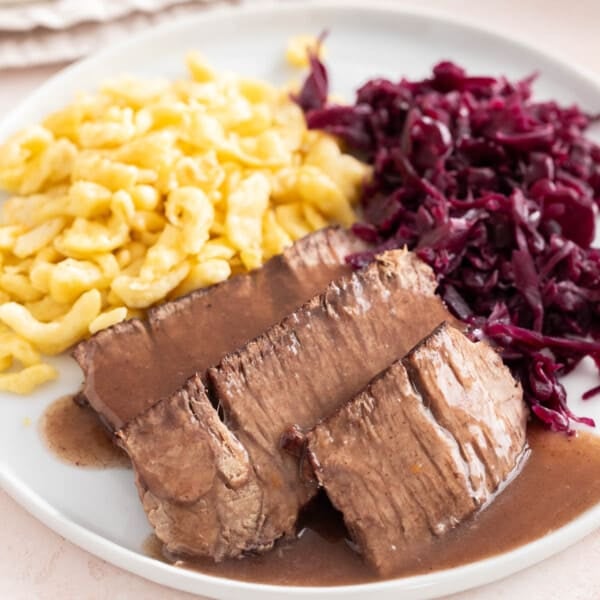
Sauerbraten

Main Dishes
Flammkuchen
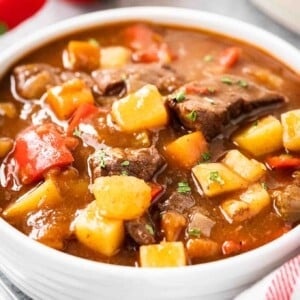
German Goulash (Rindergulasch)
Ingredients
- 2 tablespoons olive oil
- 2 pounds stewing beef, cut into 1-inch cubes
- 2 yellow onions, chopped (about 3 cups)
- 1 large carrot, diced
- 1 celery stalk, chopped
- 2 tablespoons tomato paste
- 2 tablespoons sweet paprika, Hungarian preferred
- 1 teaspoon dried marjoram
- 1 teaspoon hot paprika
- 1 cup red wine
- 2 cups beef broth
- 2 bay leaves
- 1 teaspoon salt, plus more to taste
- ¼ teaspoon ground black pepper, plus more to taste
- 2 tablespoons water
- 2 tablespoons cornstarch
Instructions
- Heat olive oil in a large Dutch oven over high heat. Pat beef dry and season with salt and pepper. Brown in batches, searing on all sides until deeply golden, 2 to 3 minutes per side. Transfer browned beef to a plate.2 tablespoons olive oil, 2 pounds stewing beef
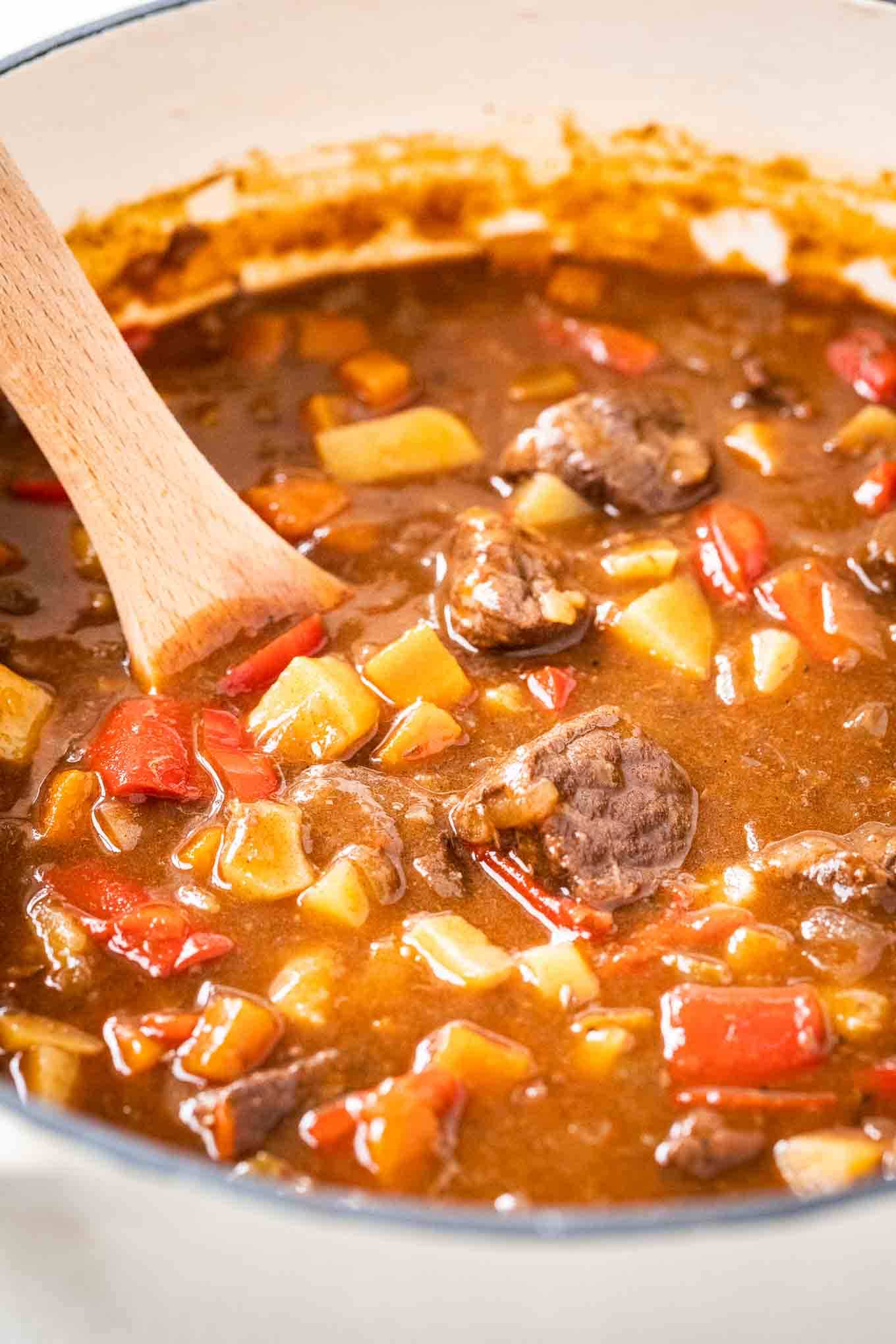
- Reduce heat to medium-high. Add onions, carrots, and celery to the same pot. Sauté for 5-6 minutes until lightly browned.2 yellow onions, 1 large carrot, 1 celery stalk
- Add tomato paste. Stir constantly for 1 minute. Then add paprika, marjoram, and hot paprika or cayenne if using. Stir for 30 seconds.2 tablespoons tomato paste, 2 tablespoons sweet paprika, 1 teaspoon dried marjoram, 1 teaspoon hot paprika
- Pour in red wine and beef broth. Scrape the bottom of the pot with a spatula to release any browned bits. Bring to a simmer.1 cup red wine, 2 cups beef broth
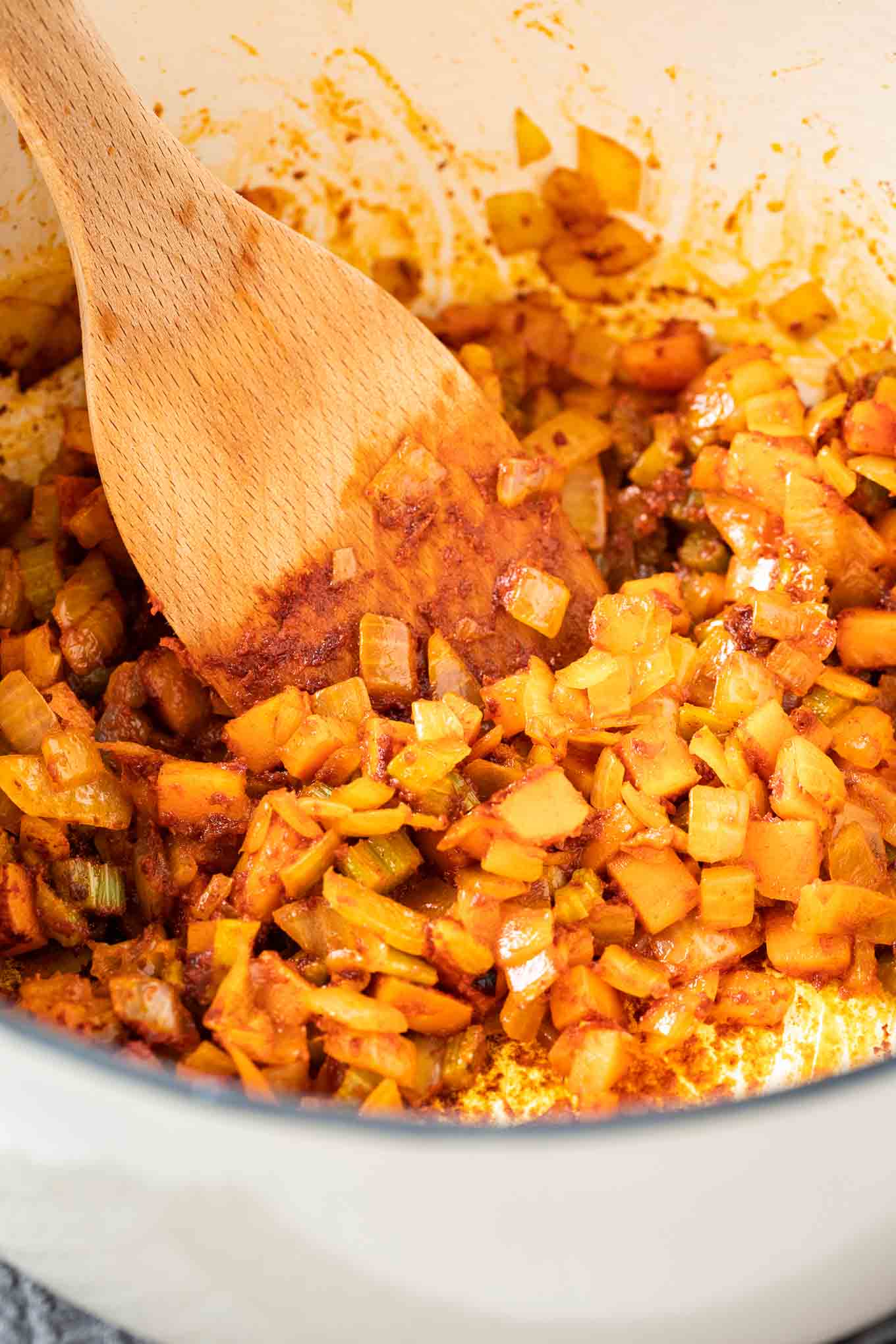
- Return beef to the pot along with any resting juices. Add bay leaves. Reduce heat to low. Simmer covered for about 2 hours, stirring occasionally, until the meat is fork-tender and the sauce has thickened.2 bay leaves
- If adding potatoes or bell peppers, add them 30 minutes before the cook time ends.
- Remove bay leaves. Taste and adjust salt and pepper.1 teaspoon salt, ¼ teaspoon ground black pepper
- To thicken: Combine water and cornstarch in a small bowl and add it to the goulash. Bring to a simmer while stirring constantly until thickened.2 tablespoons water, 2 tablespoons cornstarch
- Serve over bread or potato dumplings, spaetzle, or with crusty bread.










Another winner – I loved it. I agree the paprika is the key to the flavor, and am glad I specifically bought the Hungarian sweet paprika for the dish.
Hi Julia! I’d put a bit of caraway seeds in it as well.That would make it even more Hungarian :)
This is my goto favorite for goulash. I hunted down this recipe after having the best goulash at a small cafe in Vienna while on travel.
Hallo Julia:) My family is from Germany and I MISS my Oma’s and Mom’s cooking. This German Apple Cake recipe, the Schnitzel and cucumber salad were point on! Everyone LOVED it, and tasted just like “German homemade meals”! I’m making your Hungarian Goulash this weekend! Yum! I love your website!!!
It was a success thank you very much for the recipe everyone loved it
I am making this for tonight. It is a dreary, rainy day….. bring on the comfort food!
This is pure comfort food! Just what i wanted on a chilly fall day!