This post may contain affiliate links.Please read our disclosure policy.
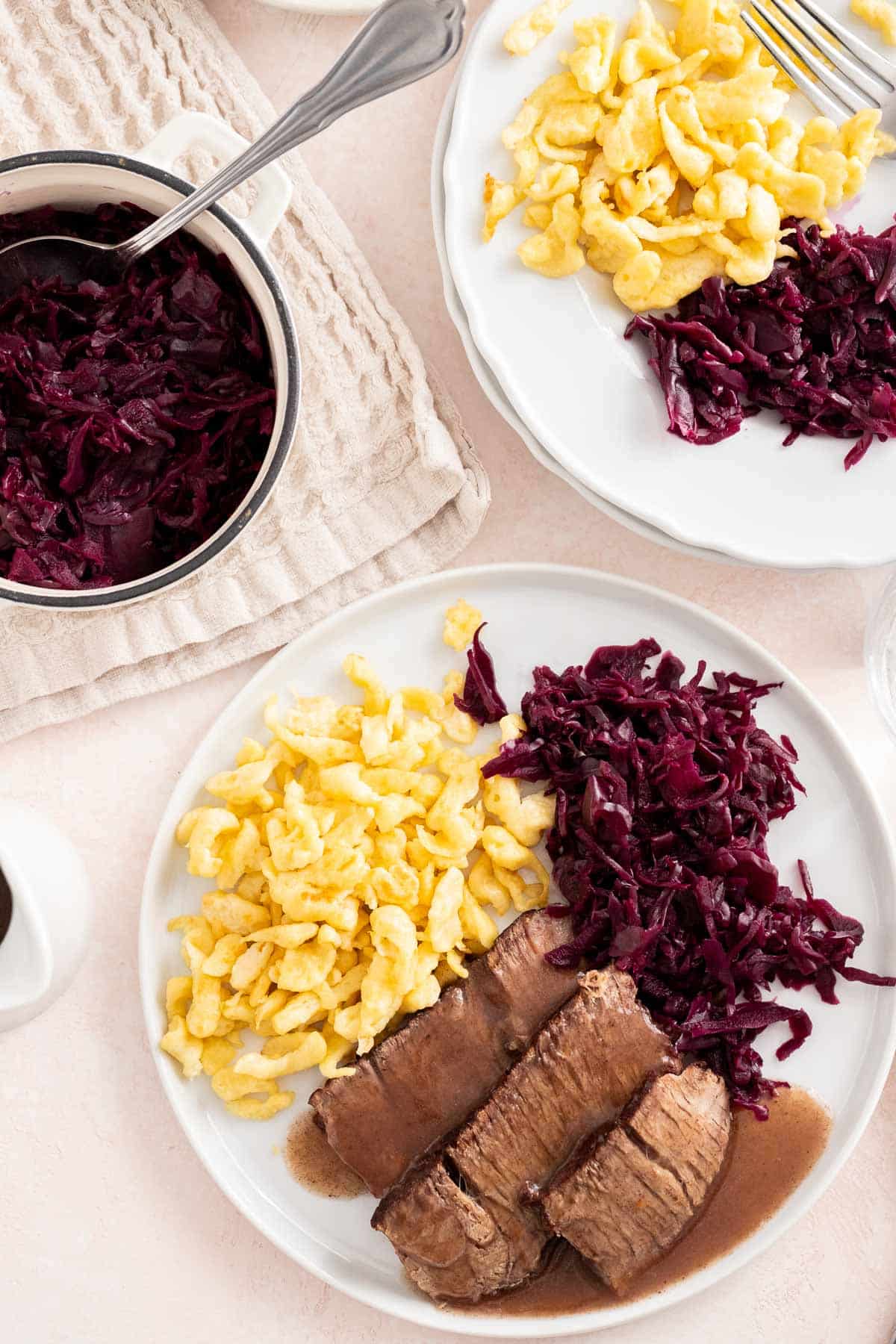
Traditional German Sauerbraten is the definition of comfort food! Melt-in-your-mouth beef served in a rich gravy with the perfect balance of savory and tangy notes. In this authentic recipe, beef is marinated for days and slowly braised. Perfect for Oktoberfest celebrations or a cozy Sunday family dinner!
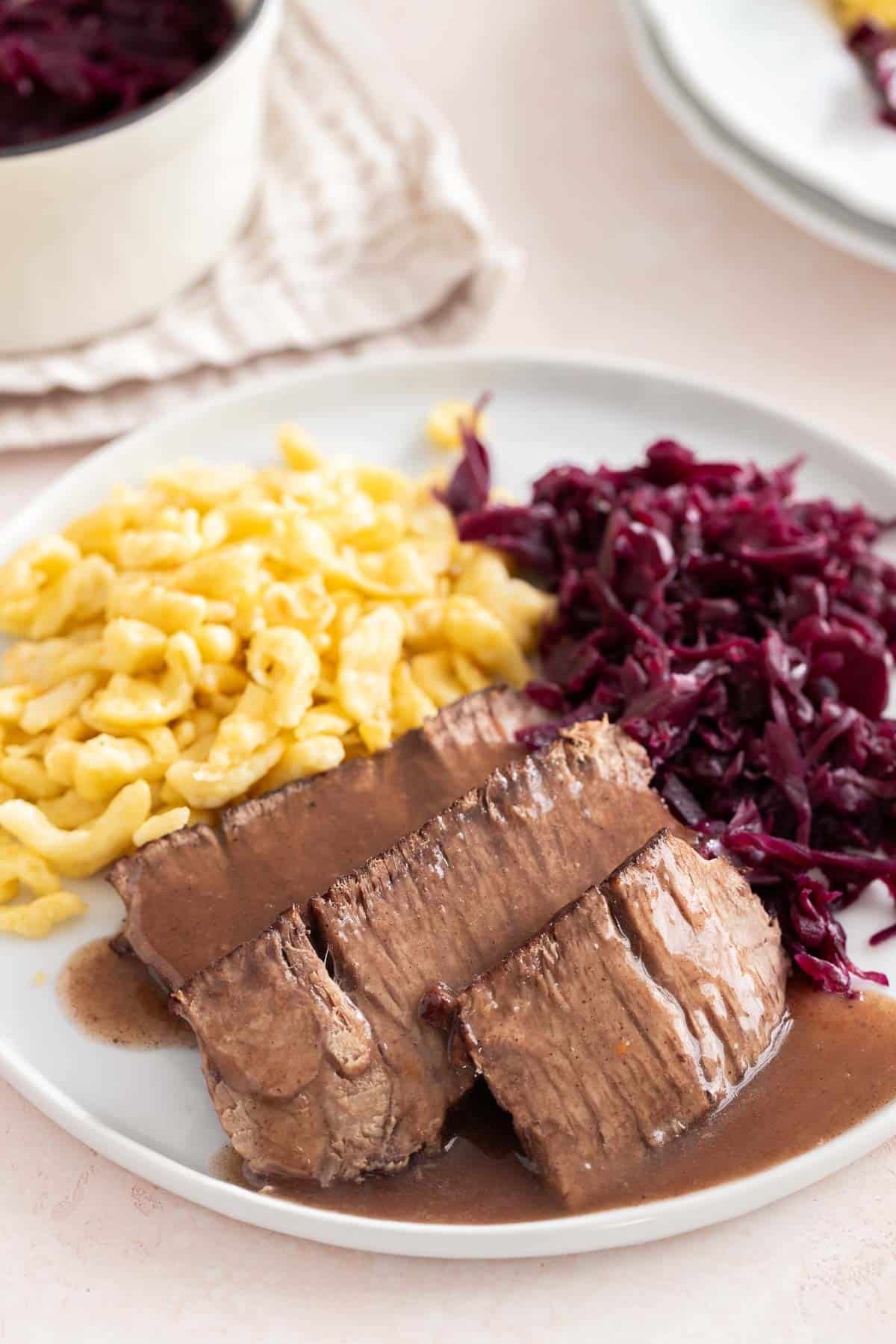
If you love tender, slow-cooked beef with a rich, velvety sauce, this authentic German Sauerbraten is a recipe you need to try! I grew up in Germany eating this dish at family gatherings, holidays, and Sunday lunches, and it’s one of the most iconic German dishes. As a German living abroad, this is the version I know by heart that always reminds me of home.
Like many traditional German dishes, Sauerbraten is made slightly differently depending on the region. While the Rheinischer Sauerbraten is typically made with raisins and beet syrup for a sweeter profile, I’m from Franconia, a part of Bavaria. Our version is less sweet and traditionally thickened with Soßenlebkuchen, a special type of German gingerbread used just for sauces (don’t worry, I have an easy substitute I use all the time!). This is the style you will find in traditional restaurants (Wirtshäuser in German) throughout Bavaria!
Why Our Recipe
- 100% Authentic (No Gingersnaps!): I’m German, and this is the traditional German recipe my Oma and mother-in-law have used for decades to make their Sauerbraten.
- Manageable Marinating Time: No need to marinate the beef for 7 days (or longer). In my experience, 3-5 days is the sweet spot for tenderness and flavor. In a pinch, even 2 days yields a delicious roast, depending on the cut of meat.
- Ideal to prep: This recipe can be made ahead and reheated easily. My mother-in-law also often freezes her Sauerbraten, and it tastes delicious. Perfect for stress-free holiday entertaining or Sunday dinners made in advance.
Key Ingredients
Here is an overview of the ingredients you’ll need for this recipe. Scroll down to the recipe card at the bottom for quantities.
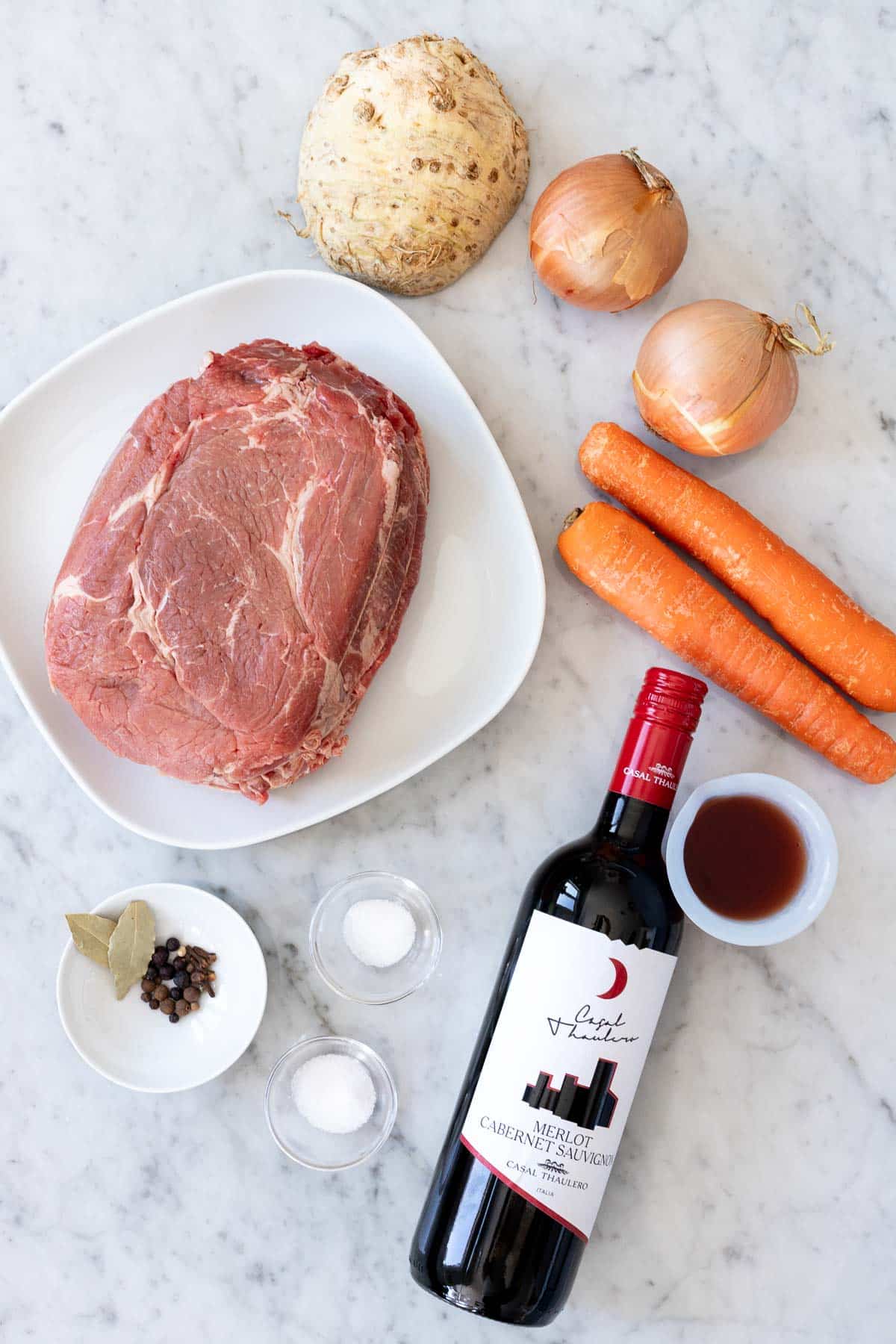
- Red wine. I recommend using a dry and fruity wine like a Merlot. Other full-bodied, robust wines like Pinot Noir, Dornfelder, or Cabernet Sauvignon work too. If you can find a German Dornfelder or Lemberger, it makes it even more authentic, but it doesn’t need to be an expensive wine.
- Vinegar. You want to use a mild vinegar. My go-to is a red wine vinegar, but you can also use a white wine vinegar. I don’t recommend using balsamic vinegar because it is too sweet and syrupy for the marinade.
- Vegetables. The vegetables add a lot of flavor to the gravy while the roast is cooking. I use a mixture of onions, carrots, and celeriac (celery root), but you could also replace the celeriac with a parsley root, which has a similar flavor profile, or leave it out if you can’t find it in the store.
- Spices. The spices give the Sauerbraten its authentic flavor. You need juniper berries, allspice berries, bay leaves, peppercorns, and whole cloves.
- Roast. The best meat for Sauerbraten is a tougher, well-marbled cut of beef. I recommend using a beef chuck roast because it is easily available and comes out tender because of the marbling. A more traditional cut of meat would be a bottom round, rump roast, or eye of round, but they often take a bit longer to get perfectly tender.
- Bread. In Bavaria, we use Soßenkuchen (sauce gingerbread). Since that is difficult to find outside of Germany, I usually add a crumbled slice of stale German-style rye or sourdough bread. You can usually find it in the grocery store. It’s the perfect authentic substitute to thicken the gravy naturally. (Please skip the gingersnaps!)
- Lebkuchen Gewürz. To get that traditional spiced Sauerbraten flavor, I add German gingerbread spice. Perhaps you have some leftover from making my German Lebkuchen recipe, but I have also added the measurements into the notes section of the recipe card.
- Honey. If the sauce has too much acidity, I balance it out with a little bit of honey. You can also use sugar or agave syrup.
How to thicken Sauerbraten gravy (the authentic way)
You may come across American recipes that use gingersnap cookies to thicken the gravy. While this has become popular in the U.S., it isn’t something you would find in Germany, and I highly recommend skipping it.
Gingersnaps add an overpowering sweetness and an aggressive ginger kick that masks the delicate balance of the wine and vinegar. I’ve tested it out of curiosity, and for my family, the flavor wasn’t right. Traditional Sauerbraten should be savory and tangy, not overly sweet and ginger-flavored.
In Bavaria, the sauce is traditionally thickened with Soßenlebkuchen, a special kind of gingerbread made for savory dishes. It’s much less sweet, and the flavor profile is completely different.
Since Soßenlebkuchen are difficult to find outside of Germany, I use a method that replicates the flavor perfectly:
- German Bread: Crumble a slice of stale German rye or sourdough bread into the pot. It dissolves into the sauce, adding body and rustic, savory depth.
- Spice Blend: Add a teaspoon of German gingerbread spice (Lebkuchen Gewürz) to get that signature warmth.
- Cornstarch: If the gravy still needs thickening, a little bit of cornstarch works perfectly well. The gravy comes out perfect this way!
My Top Tips Before You Start
- Food Safety. Since you are marinating the beef for several days, it’s important to follow proper food safety practices. Use clean utensils and containers, keep the meat fully submerged, and refrigerate it. For extra safety and a deeper flavor, I recommend boiling the marinade for at least 5 minutes and letting it cool completely before pouring it over the raw meat.
- “Golden Ratio” for the marinade. My family prefers the combination of 4 parts of red wine to 1 part of vinegar; this way, the finished roast is tender and flavorful without the acidity overpowering the taste.
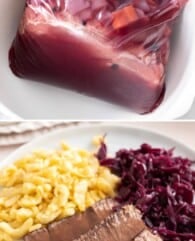
- Use a freezer bag. It’s important to use a non-reactive container for marinating the beef. Never use a metal bowl or pot. I recommend using a large freezer bag, which ensures the meat stays submerged without the need to turn the roast daily. You can also use a plastic or glass bowl with a lid, but make sure to turn the meat every day.
- Don’t Over-Marinate. After testing this recipe multiple times, I found that 3 days of marinating is enough time to infuse the roast with flavor. You can marinate it longer, but I don’t recommend going over 5 days, or the roast will be too sour and the meat might go bad.
- Vegetables. Traditionally, the vegetables help flavor the sauce while the roast is cooking but aren’t always blended back in. Personally, I prefer not to use the strained veggies in the gravy. I just slightly press down on them while straining the sauce to extract more flavor. But you can certainly puree some of them in the sauce if you prefer; just make sure to fish out the whole spices first.
How to make Sauerbraten
Here is a visual guide so you can see how to make this recipe step-by-step. Please note that these pictures are meant to provide a helpful visual overview of the recipe. Full measurements and detailed instructions are located in the printable recipe card at the bottom of this post.
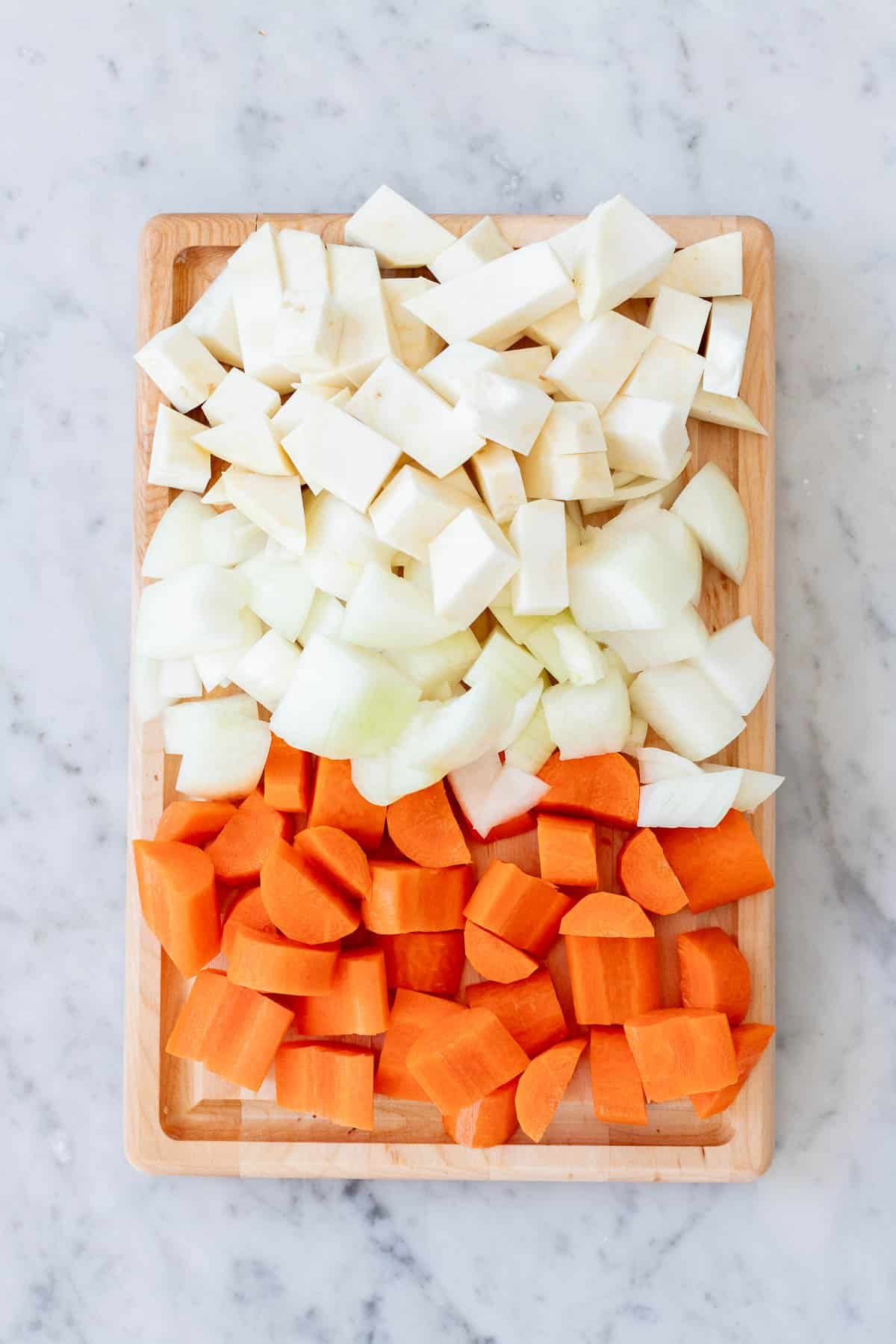
STEP 1: Peel and chop the vegetables into large chunks.
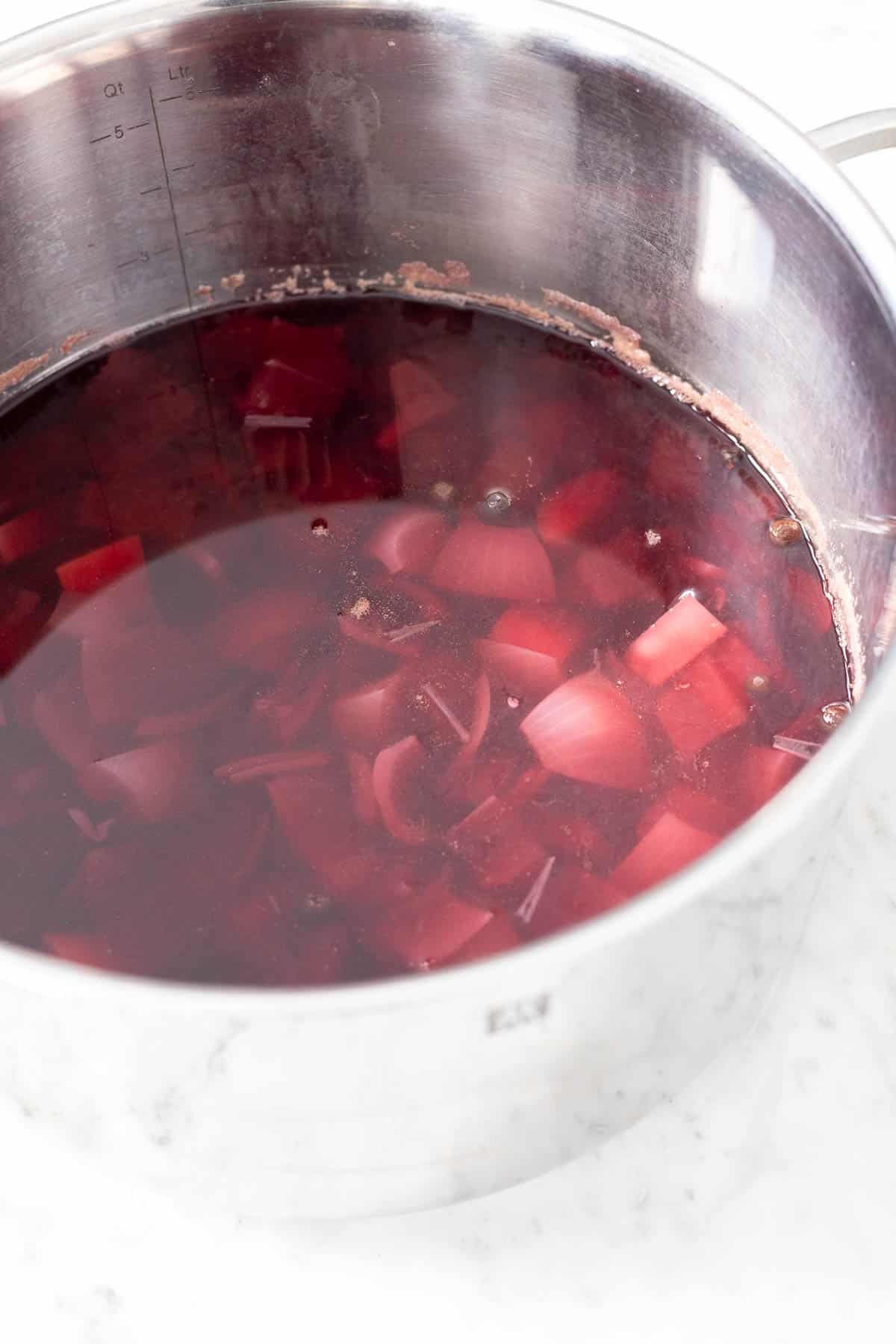
STEP 2: Make the marinade by combining vegetables, wine, vinegar, and water and boiling it for 5 minutes.
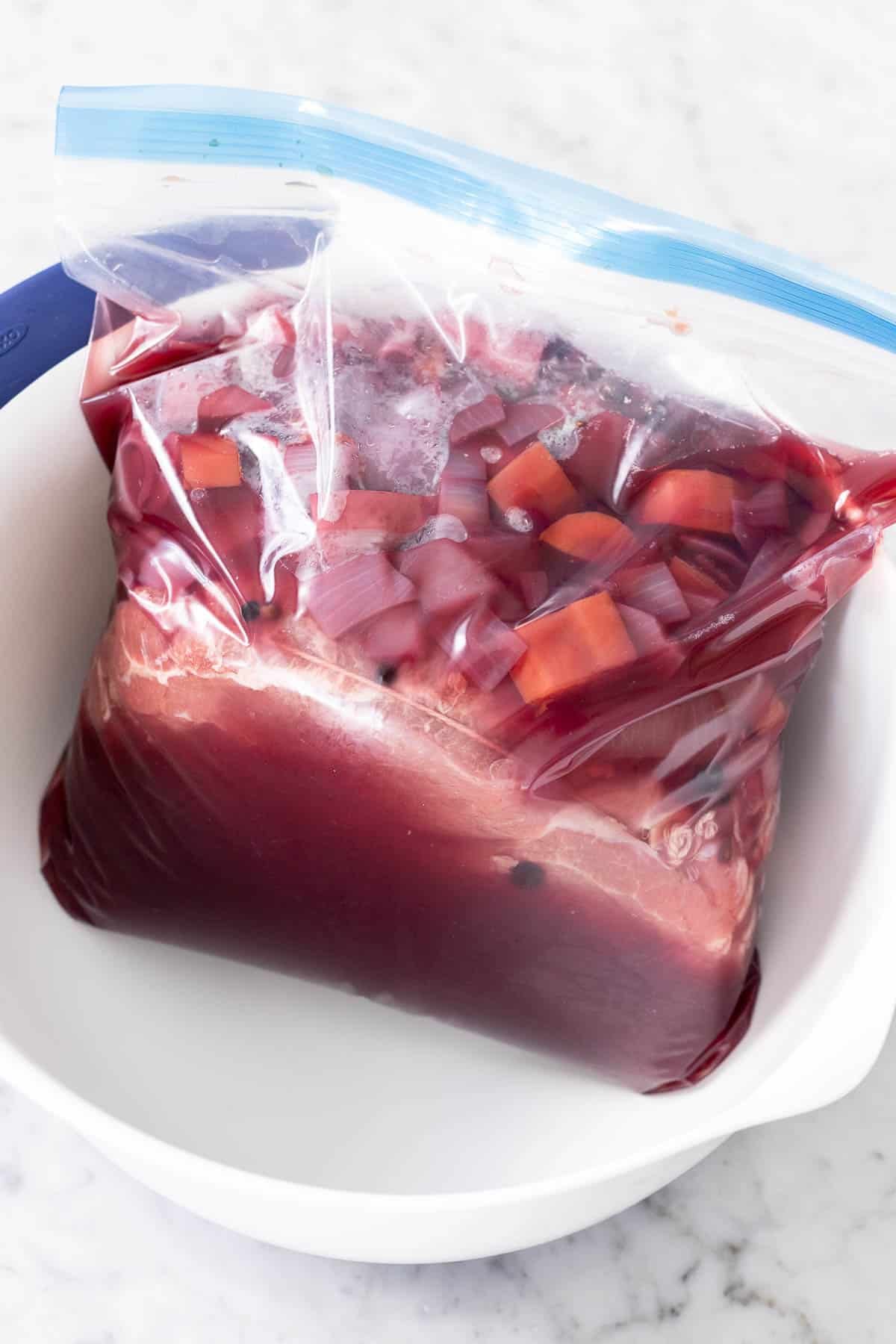
STEP 3: Put the meat and the marinade in a freezer bag and put it in the fridge for 3-5 days.
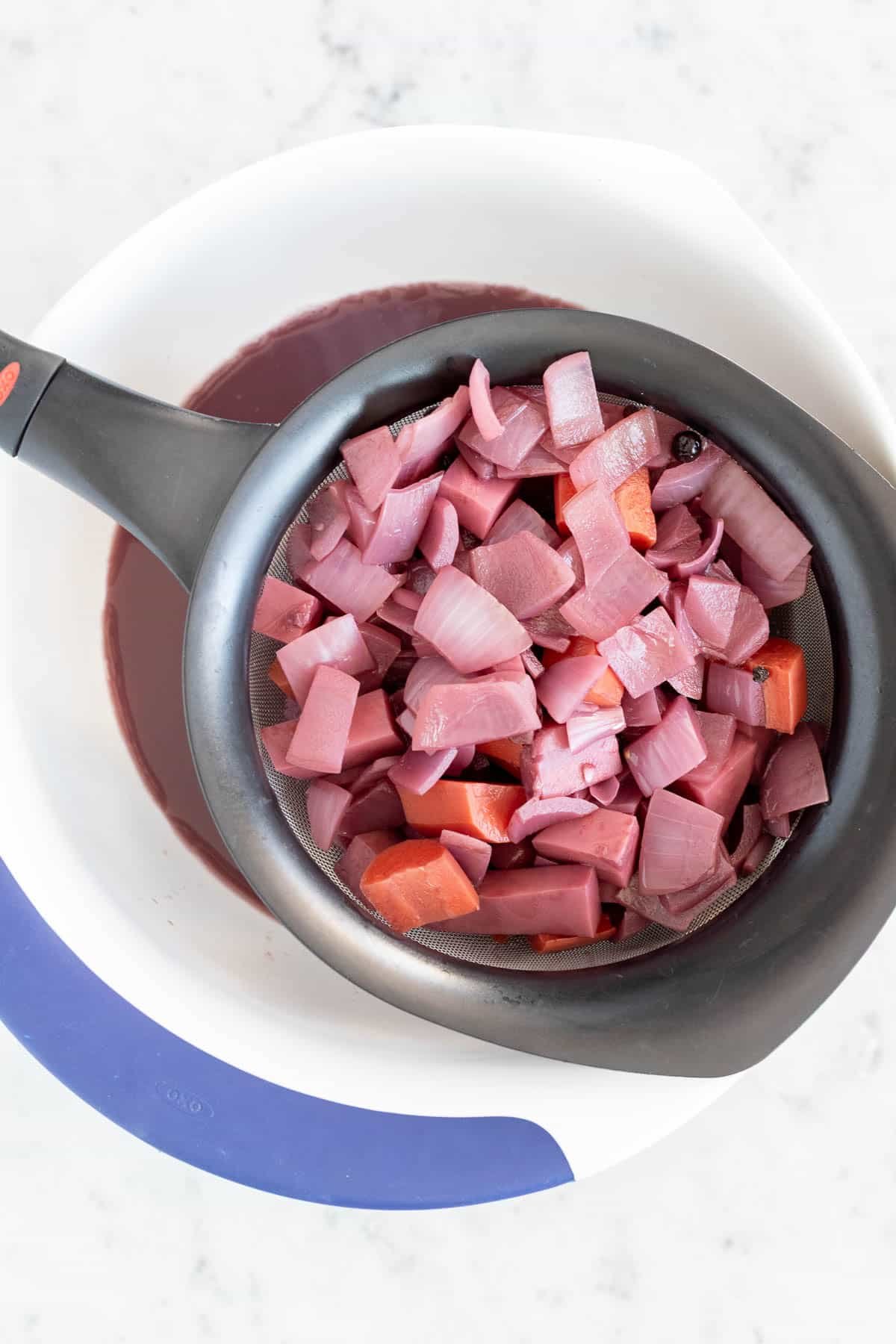
STEP 4: Pour the marinade through a sieve. Take out the bay leaves.
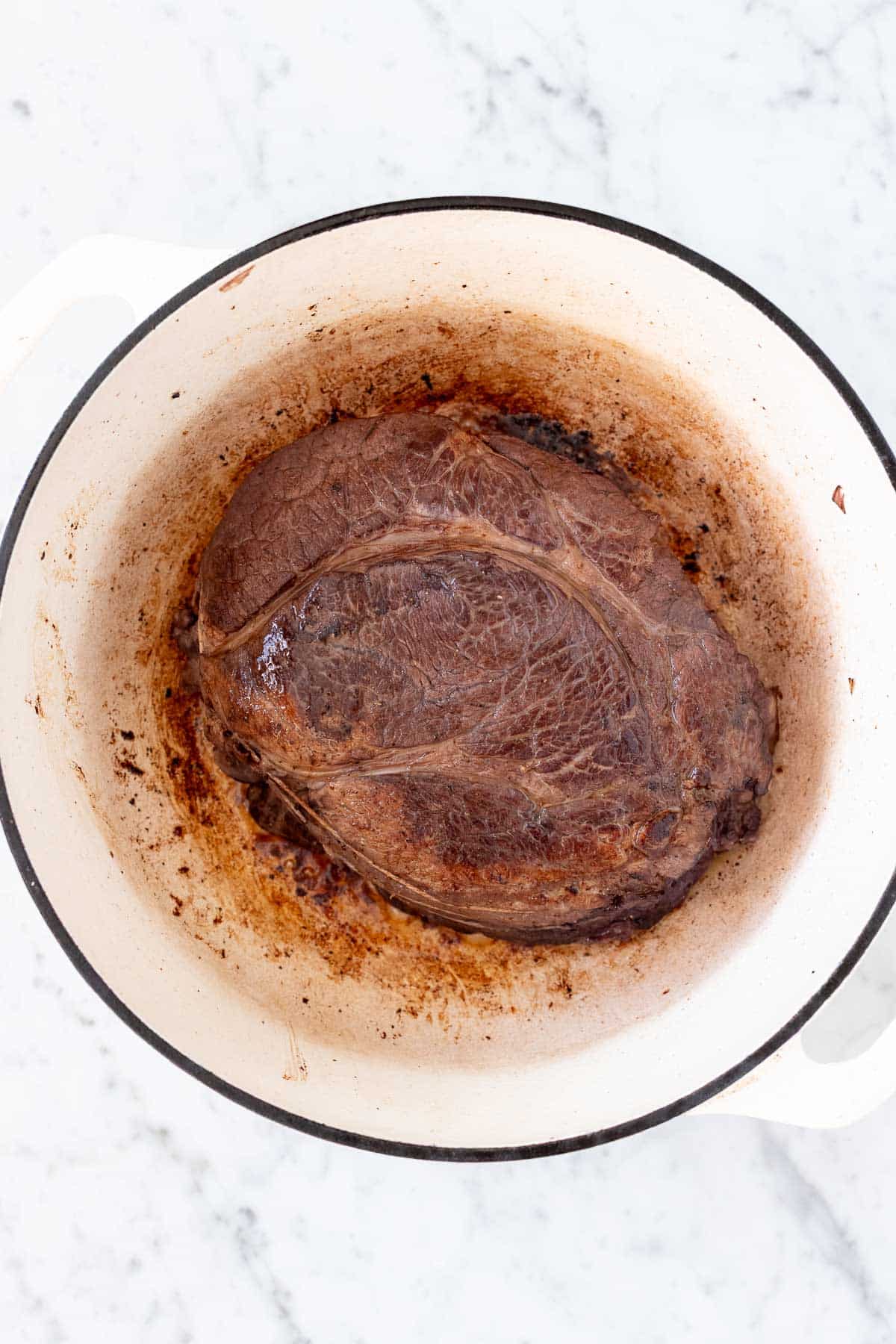
STEP 5: Sear the meat on all sides until nicely browned.
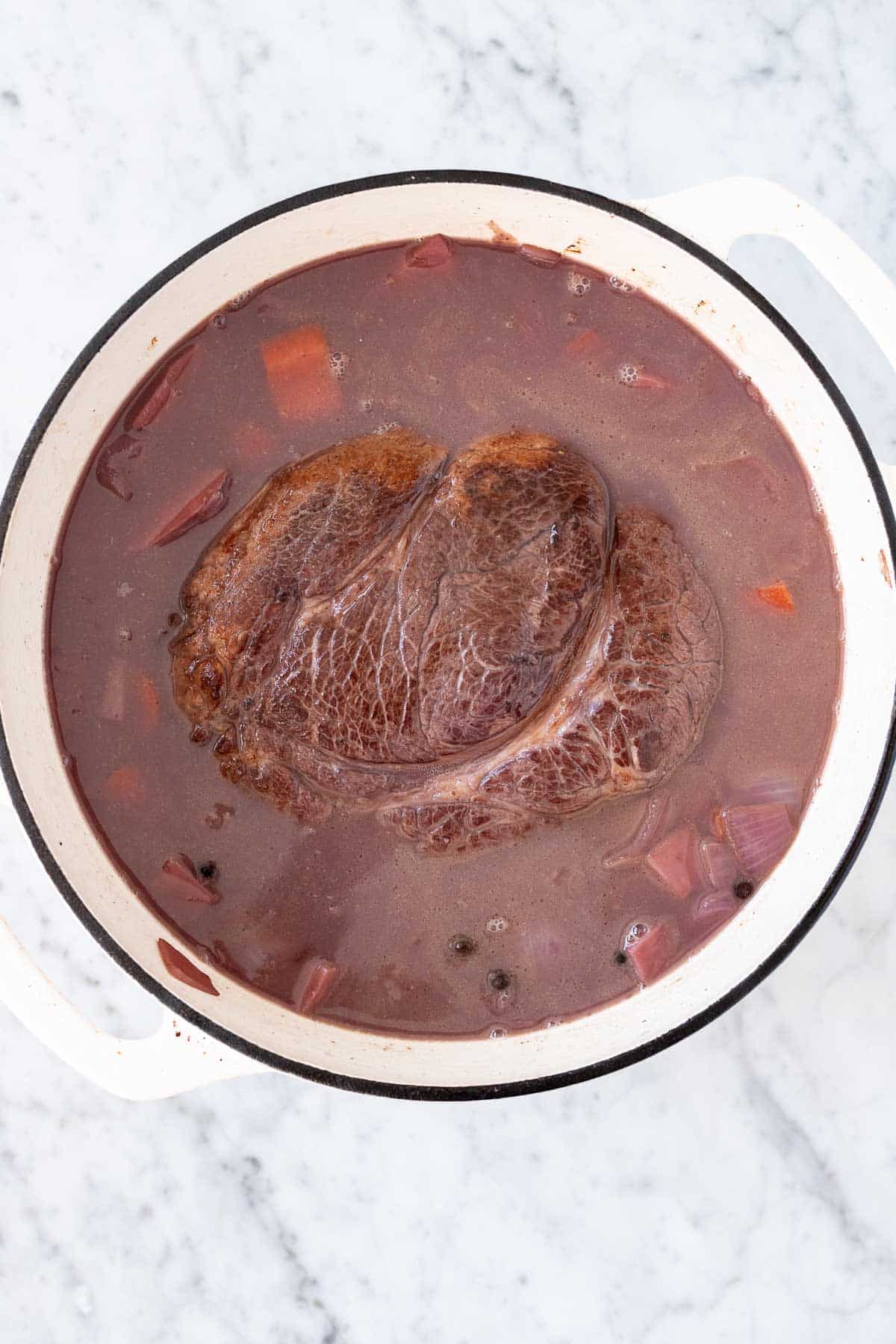
STEP 6: Sauté the vegetables with the meat for 1 minute, then pour the marinade into the Dutch oven. Cook for 3 hours in the oven.
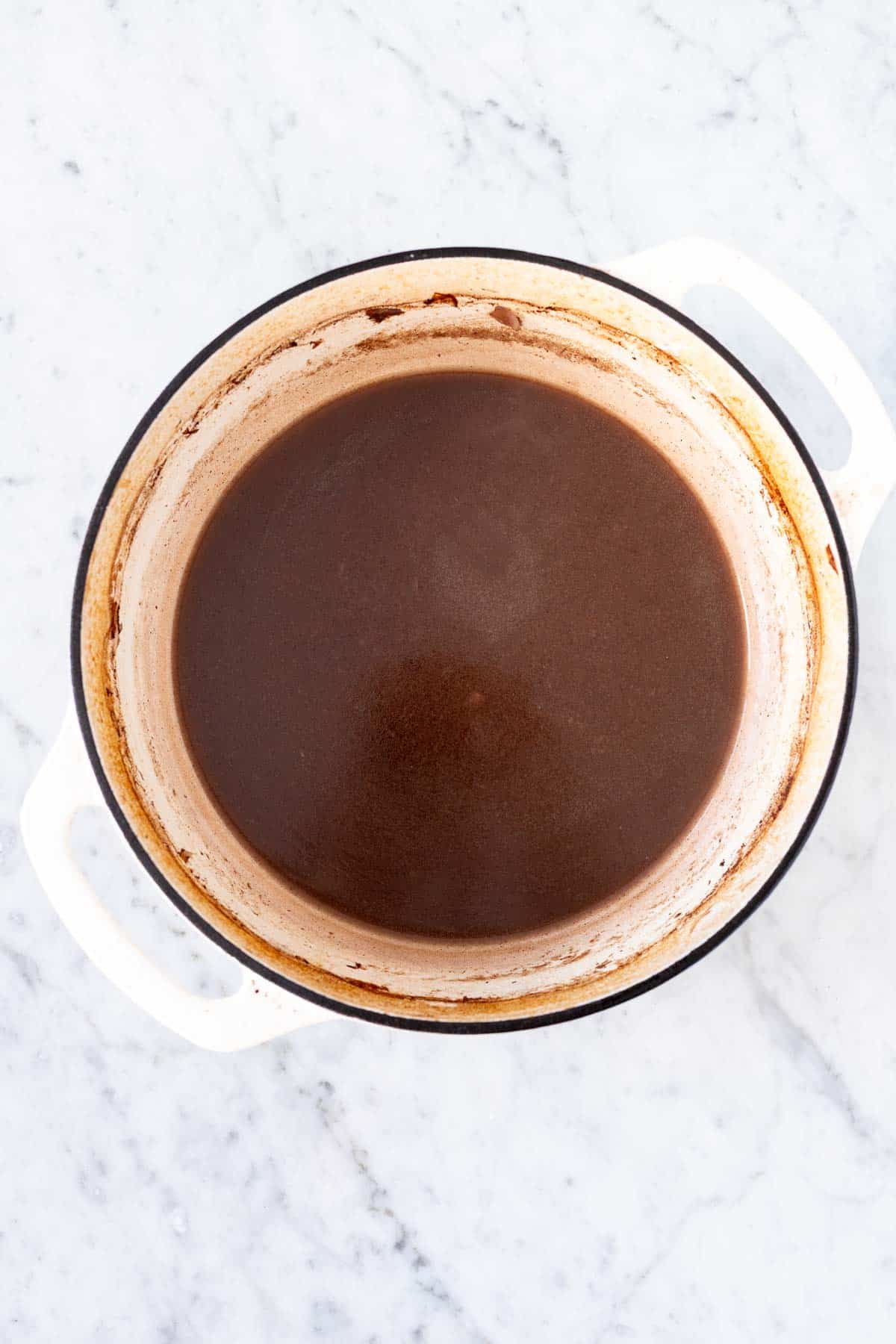
STEP 7: When the roast is fork-tender, take it out and pour the sauce through a sieve. Pour it back into the Dutch oven and reduce the sauce, then adjust the taste and thicken it with cornstarch.
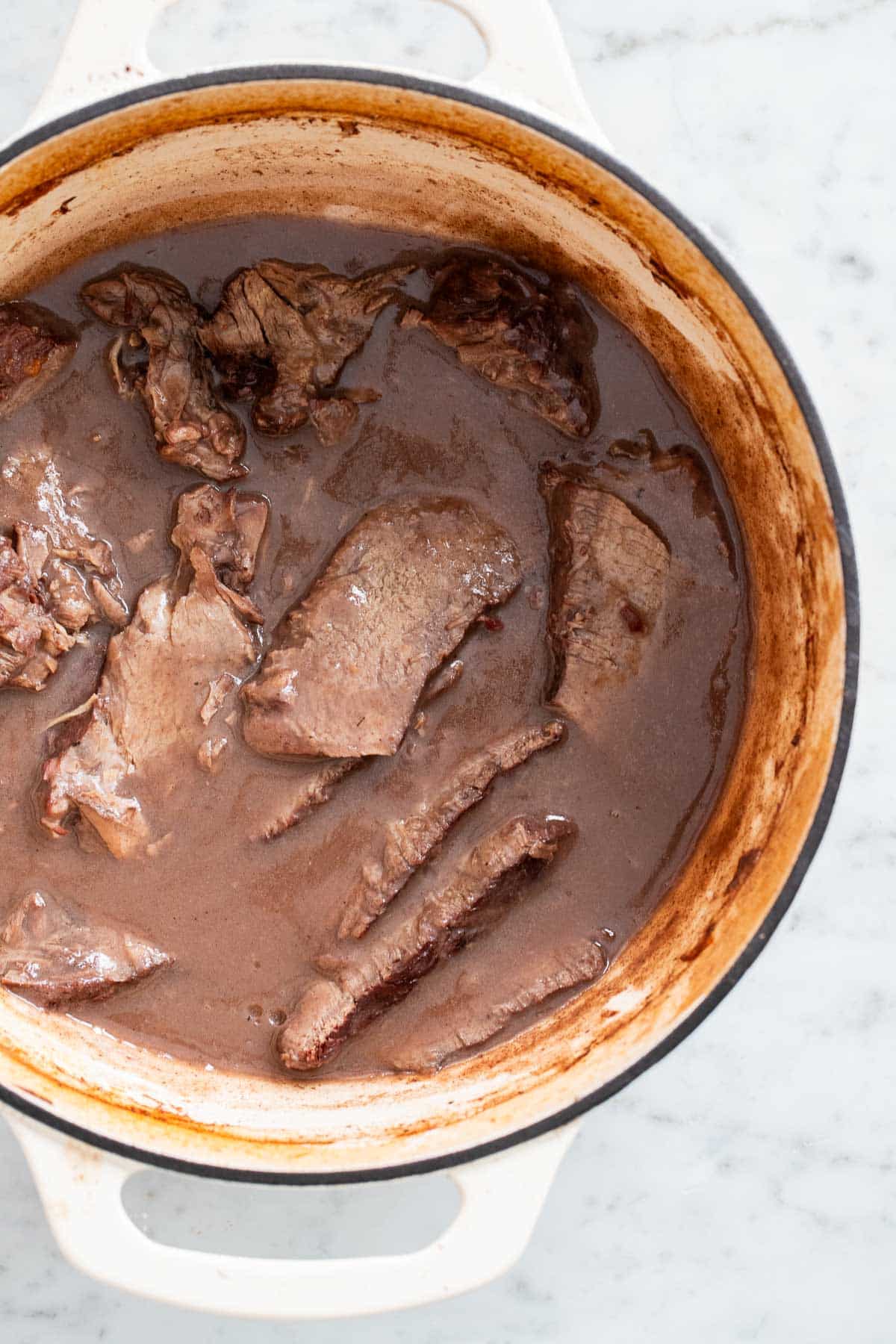
STEP 8: Cut the roast into 1/2-inch slices and put the slices back into the gravy.
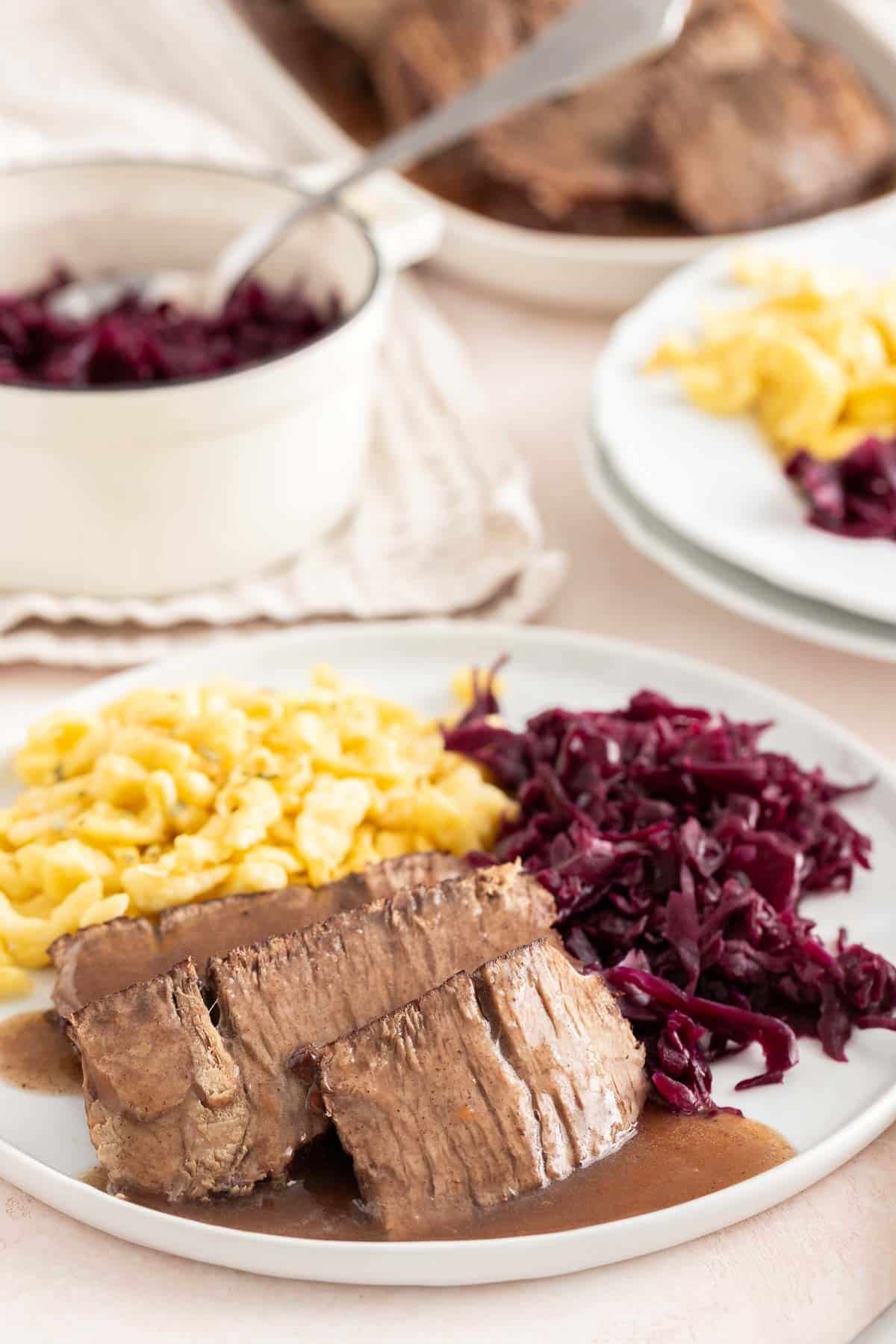
Serving Suggestions
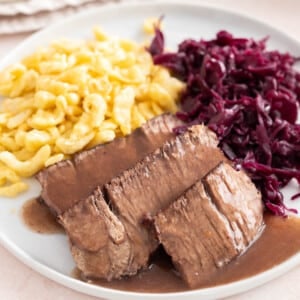
My favorite way to serve Sauerbraten is with homemade potato dumplings (coming soon) or homemade German spaetzle and my super traditional but so easy-to-make German red cabbage recipe (Blaukraut in German) on the side.
I often make the spaetzle on the day before and just throw them into a pan with some butter to make them golden and slightly crispy before serving. So easy, and my whole family loves it!
And if you’re looking for a German dessert to serve after, try out my Apple Strudel Recipe!
Storage & Freezing
Store: The cooked Sauerbraten keeps for 2-3 days in the fridge. Put the sliced meat in the gravy and store it in an airtight container. Reheat the meat in the gravy.
Freeze: You can also freeze the cooked roast for 2-3 months. The best way is to freeze it in the gravy. This way the meat stays tender, and it’s easier to reheat it in the oven or on the stove over low heat after letting it thaw in the fridge overnight.
More Recipes to Try
Main Dishes
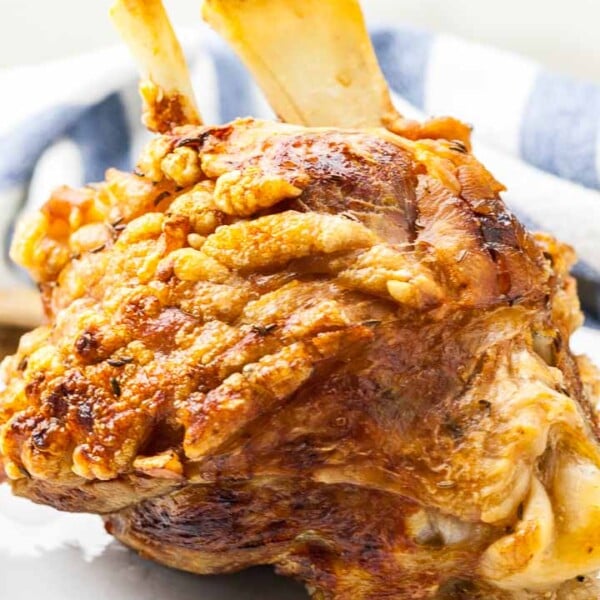
German Pork Hock (Schweinshaxe Recipe)
Sides & Salads
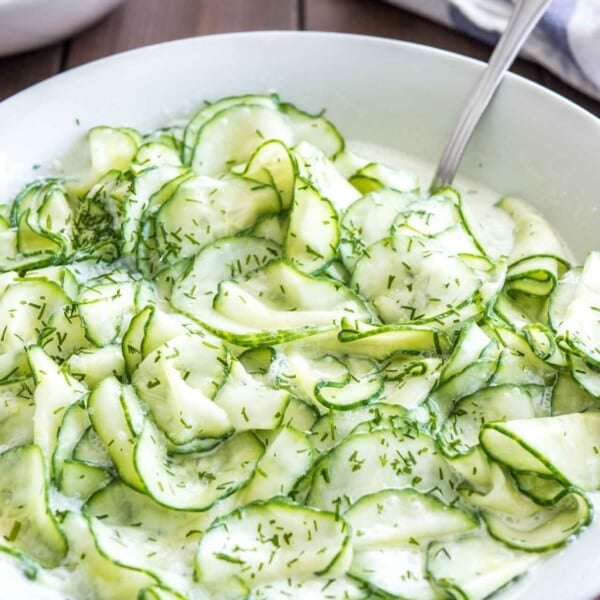
German Cucumber Salad Recipe

Main Dishes
German Schnitzel
German Recipes
German Potato Salad
German Sauerbraten Recipe
Equipment
- 1 Dutch Oven 6-quart
Ingredients
For the marinade
- 2 cups red wine, e.g., Merlot
- ½ cup red wine vinegar
- 3 cups water
- 2 medium onions
- 2 carrots
- ½ large celery root, or 1 small or parsley root
- 8 juniper berries
- 5 allspice berries
- 2 bay leaves
- 10 peppercorns
- 4 cloves
- 1 teaspoon salt
- ½ teaspoon sugar
For the roast
- 3 pound beef roast, chuck, rump, or bottom roast
- 1 teaspoon ground pepper, to season the meat
- 1 tablespoon vegetable oil, e.g., avocado oil
- 1 teaspoon German gingerbread spice, see notes
- 1 slice German bread, optional
For the gravy
- cornstarch, as needed
- honey, to taste
Instructions
- Prepare the marinade: In a large enough pot, combine red wine, vinegar, and water. Peel the vegetables and cut them into rough, 1-inch chunks. Add them to the pot along with the spices, salt, and sugar. Bring to a boil and cook for 5 minutes. Then let the marinade cool completely to room temperature.2 cups red wine, ½ cup red wine vinegar, 3 cups water, 2 medium onions, 2 carrots, ½ large celery root, 8 juniper berries, 5 allspice berries, 2 bay leaves, 10 peppercorns, 4 cloves, 1 teaspoon salt, ½ teaspoon sugar
- Marinate the beef: Wash the meat and pat it dry with paper towels. Place the roast inside a large freezer bag (or non-reactive container with a lid) and pour the cooled marinade over it. Seal and refrigerate it for 3-5 days, turning the bag occasionally.3 pound beef roast
- Prep for roasting: Remove the meat from the fridge and take it out of the marinade 30 minutes before cooking. Pat it dry with paper towels. Pour the marinade through a sieve into a bowl, reserving both the liquid and the vegetables/spices mixture separately, but discard the bay leaves.
- Sear: Preheat your oven to 320°F (160°C). Season the roast all over with pepper. In a Dutch oven, heat oil over medium-high heat. Sear the meat on all sides until nicely browned.1 teaspoon ground pepper, 1 tablespoon vegetable oil
- Braise: Add the reserved vegetables to the pot and sauté for 1 more minute. Pour in the reserved marinade; the meat should be mostly submerged. Bring to a boil on the stovetop. Once boiling, cover with the lid and transfer it to the middle rack of your preheated oven. Cook for 2 hours.
- Add flavorings: After 2 hours, add the gingerbread spice and turn the roast. Cover and cook for 1 more hour.1 slice German bread, 1 teaspoon German gingerbread spice
- Finish the gravy: Remove the pot from the oven and transfer the roast to a cutting board to rest. Pour the sauce through a fine-mesh sieve into a bowl. Press down on the vegetables with a spoon to extract all the flavor, then discard the solids.
- Thicken and serve: Pour the liquid back into the Dutch oven, crumble the bread into the pot if you're using it, and bring the sauce to a gentle boil on the stovetop for about 5 minutes to reduce. Puree the sauce with an immersion blender to incorporate the bread for a smooth sauce. If you don't want to use bread, mix a little cornstarch with cold water and whisk into the sauce, as needed. Taste and add a little bit of honey if the sauce is too sour. Slice the meat, return it to the hot gravy, and serve with spaetzle or potato dumplings and Blaukraut.cornstarch, honey
Notes
- 1/2 teaspoon ground cinnamon
- 1/8 teaspoon ground cloves
- 1/8 teaspoon ground ginger
- 1/8 teaspoon ground allspice
- 1 pinch nutmeg
- 1 pinch ground coriander