This post may contain affiliate links.Please read our disclosure policy.
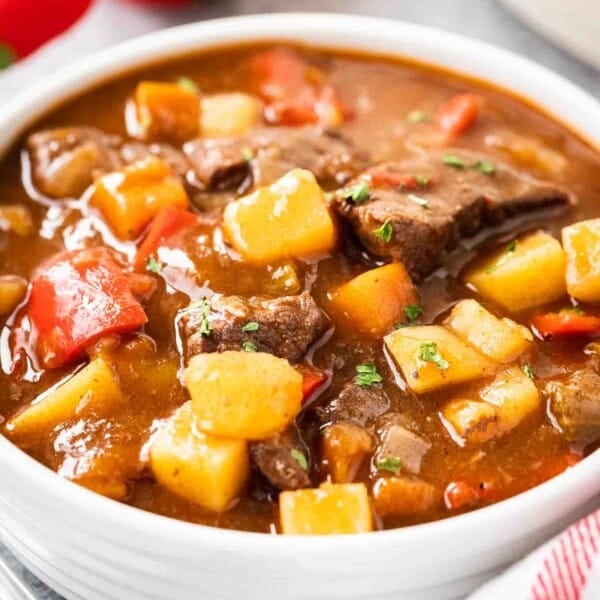
Kartoffelkloesse are my favorite German comfort food: soft, pillowy potato dumplings with a silky texture that are perfect for smothering with rich gravy. This foolproof recipe uses simple, everyday ingredients and comes out perfect every time, whether you’re making them for a holiday dinner or with a Sunday roast.
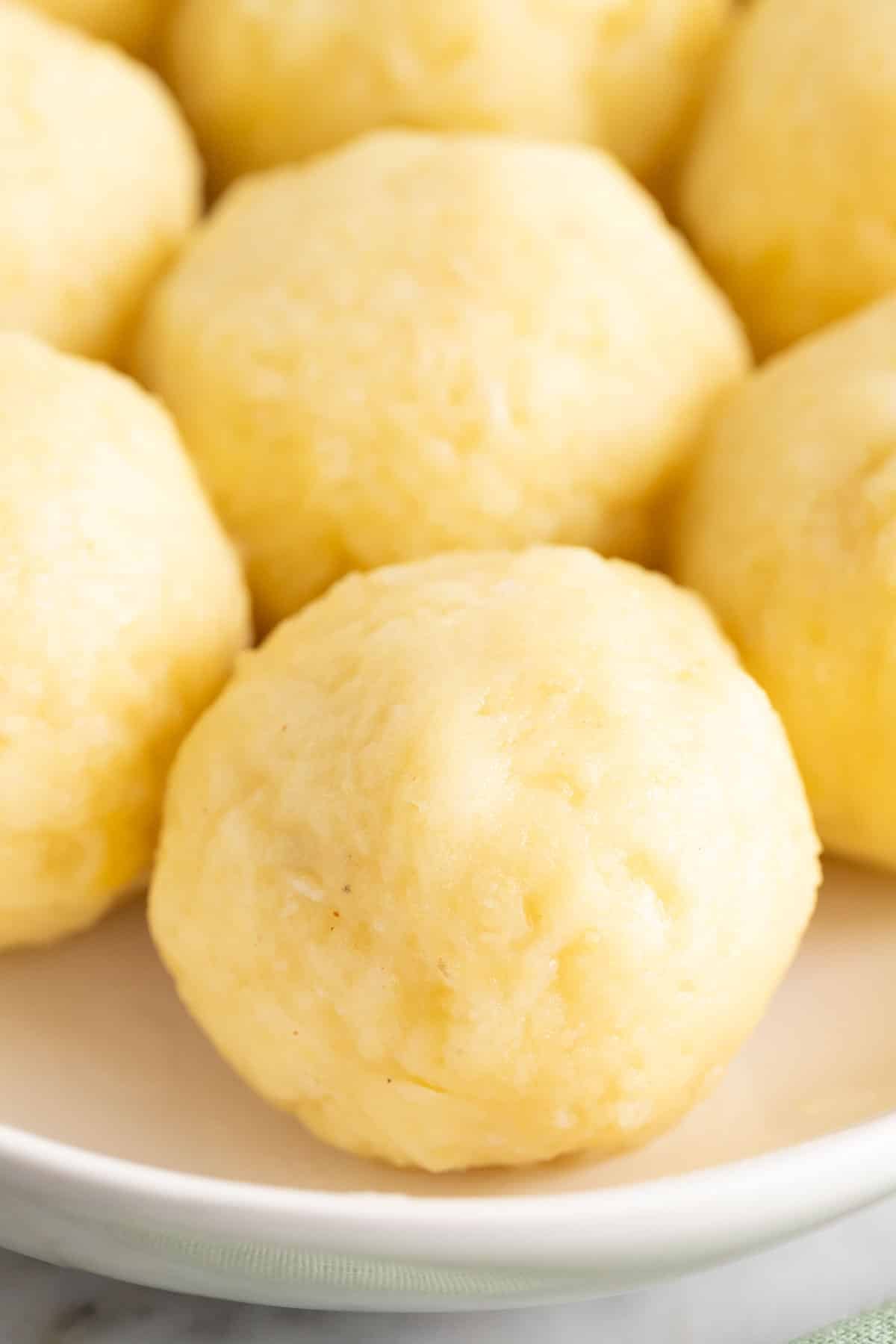
Growing up in Franconia, in northern Bavaria, Kloß mit Soß (potato dumplings with just gravy) was every child’s favorite meal, including mine. Nearly every Sunday there was a big pot of dumplings on the stove, waiting to be smothered in homemade Sauerbraten gravy.
When I moved to Canada, I quickly realized I had a problem. In Germany, most people today use ready-made refrigerated Kloßteig (dumpling dough) from the store and just shape them at home. But all I could find was the powdered version, and that was just not the same.
The first few times I tried making them from scratch, they fell apart in the pot. So in the last few years I tweaked and tested my recipe until I landed on a version that is as close to the real thing as you can get and reliable enough that they come out perfectly every time.
Why Our Recipe
- A Bavarian home cook’s recipe. My family is from Bavaria, and we all eat a lot of Klösse. So I made sure this recipe tastes like it should and has the perfect texture.
- Foolproof method. I tested this recipe a lot to make it easy for you. From the right potato variety to the test-before-you-cook trick that saves the whole batch.
- Simple, accessible ingredients. No special trip to a German grocery store is needed to get the instant stuff. Everything you need is available at most well-stocked supermarkets.
Key Ingredients (& Swaps)
Here is an overview of the ingredients you’ll need for this recipe. Scroll down to the recipe card at the bottom for quantities.
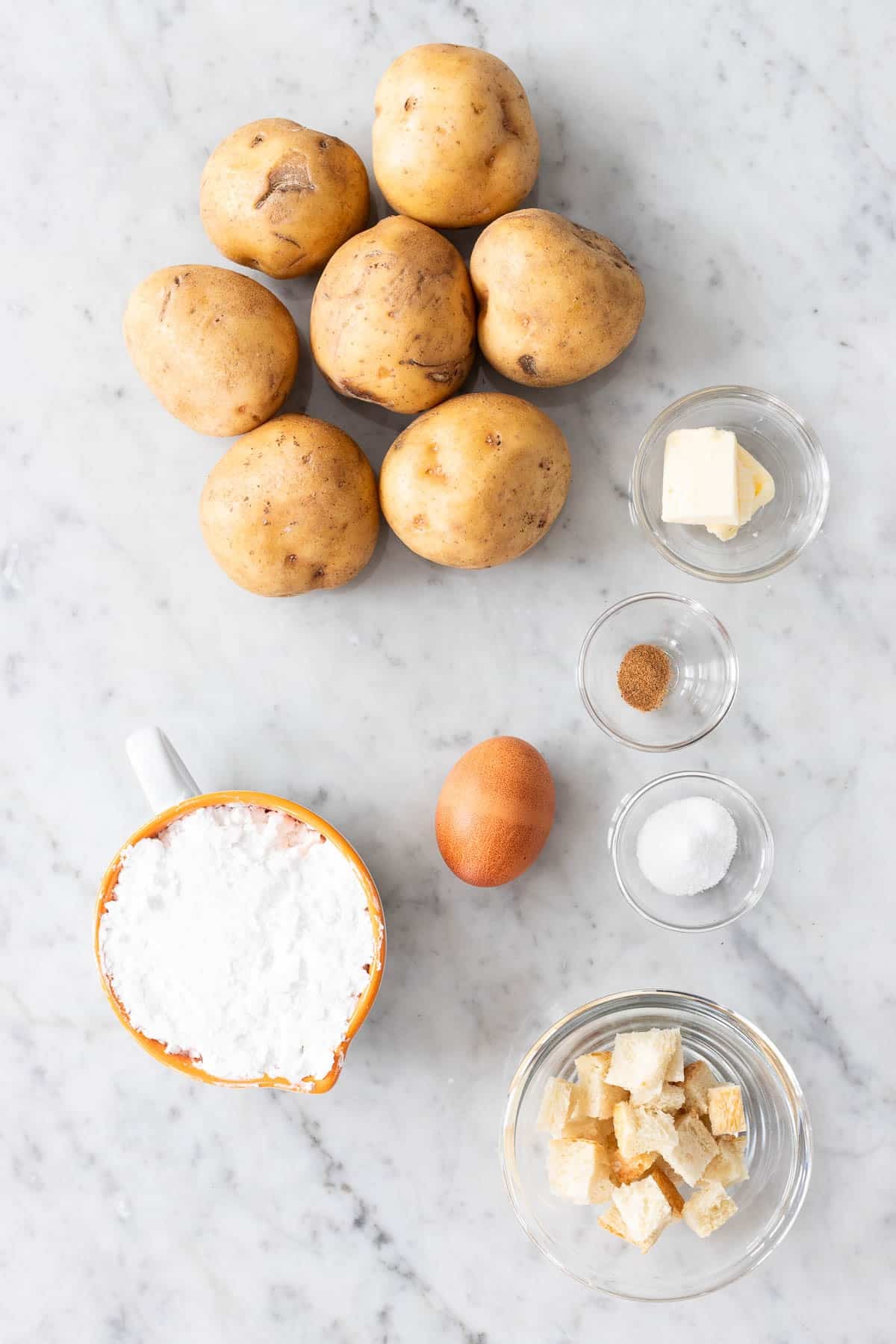
- Potatoes. I prefer to use yellow potatoes (like Yukon Gold) over russets. Because this recipe uses a good amount of potato starch to make it foolproof, starchy russets can make the dumplings come out a little dry and dense. Yellow potatoes give you a softer, more tender texture.
- Potato starch. This is the key to holding the dumplings together. Don’t substitute cornstarch (Speisestärke in German). The texture will be very different, and not in a good way. I use Bob’s Red Mill potato starch, which you can usually find with the gluten-free baking supplies. In German, it’s called Kartoffelstärke.
- Egg. Just one egg helps bind the dough. You won’t taste the egg, but it helps to make this recipe more foolproof.
- Nutmeg. A small amount of nutmeg is a classic addition to German potato dumplings that adds a subtle warmth.
- Bröckele (bread cube filling). A small cube of butter-toasted white bread hidden in the center of each dumpling is traditional in Bavaria. It helps to make sure that the dumpling cooks all the way through. If I don’t have day-old bread, I usually toast a slice of sandwich bread.
What are Kartoffelklöße?
They are traditional German potato dumplings. You may also see them spelled Kartoffelkloesse (without umlauts) or called Kartoffelknödel; both refer to the same dish.
While potato dumplings exist across Europe, from Italian gnocchi to Polish Kluski Śląskie, this German version is larger, softer, and made to soak up gravy after ripping it apart with a fork and knife.
The name changes depending on where in Germany you are. In Bavaria, we call them Klöße, while in other regions you’ll hear Knödel. In Franconia, where I grew up, no Sauerbraten was served without Klöße. They’re a fixture on the Sunday dinner table and a part of any Christmas or holiday roast spread.
The different types of German Dumplings
- Seidene Klöße (cooked potato dumplings): Made entirely from riced cooked potatoes. This is the recipe I’m sharing today. They have the softest texture and are the most beginner-friendly to make.
- Halbseidene Klöße (half-and-half dumplings): Made from half riced cooked potatoes and half grated raw potatoes. This is the style most popular in Franconia, where I grew up, and honestly, it’s what I make for special occasions. But for a reliable weeknight or holiday dinner, the all-cooked version is what I reach for every time.
- Thüringer Klösse: A Thuringian specialty made from two-thirds raw grated potatoes and one-third cooked. They are firmer and denser than the Bavarian styles.
- Semmelknödel (Bread Dumplings): A different kind of dumpling altogether that is made from day-old bread rather than potatoes.
My Top Tips Before You Start
- Use a potato ricer. A potato ricer creates a light, fluffy texture that you cannot achieve with a regular masher. My favorite trick: you can put the unpeeled cooked potatoes straight into the ricer. The skin stays behind. Just remove it before ricing the next potato.
- Let the potatoes cool. After ricing, give the mashed potatoes about 15 minutes to cool down. If they’re too hot, the egg will cook when you add it, which affects the texture of the dough.
- Use a scale for even sizing. Using a scale makes it easier to get even-sized dumplings, which is important so they cook at the same rate. I aim for about 100 g per dumpling. Alternatively, roll the dough into a long log and divide it into 10 equal portions.
- Use wet hands to shape the dumplings. The dough can be a little sticky. Wet your hands before rolling each dumpling, and it becomes much easier to get a smooth, even shape.
- Use a large pot. The dumplings need some room to swim without touching each other. If the pot is too small, they’ll stick together and deform.
- Never let the water boil. This is the most common reason Kartoffelkloesse fall apart. Once you’ve brought the water to a boil to heat the pot, reduce the heat until you see no movement, then add the potato dumplings.
- The test dumpling. Before cooking the whole batch, I recommend cooking a single test dumpling when you make this recipe for the first time or if you use a different kind of potato. If it falls apart, simply knead more potato starch into the remaining dough. This one step can save your entire dinner.

How to make Kartoffelkloesse
Here is a visual guide so you can see how to make this recipe step-by-step. Please note that these pictures are meant to provide a helpful visual overview of the recipe. Full measurements and detailed instructions are located in the printable recipe card at the bottom of this post.
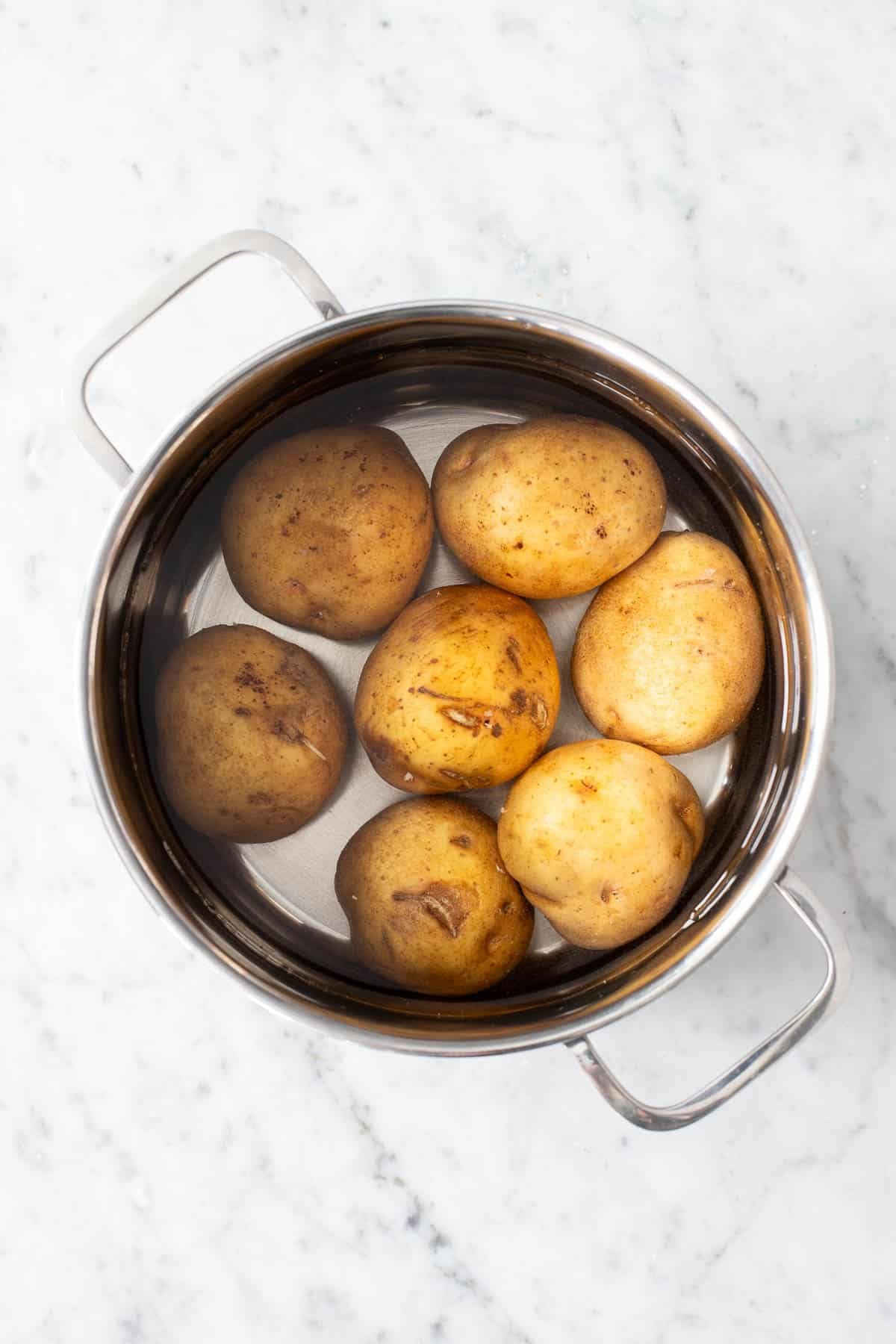
Step 1: Cook the potatoes.
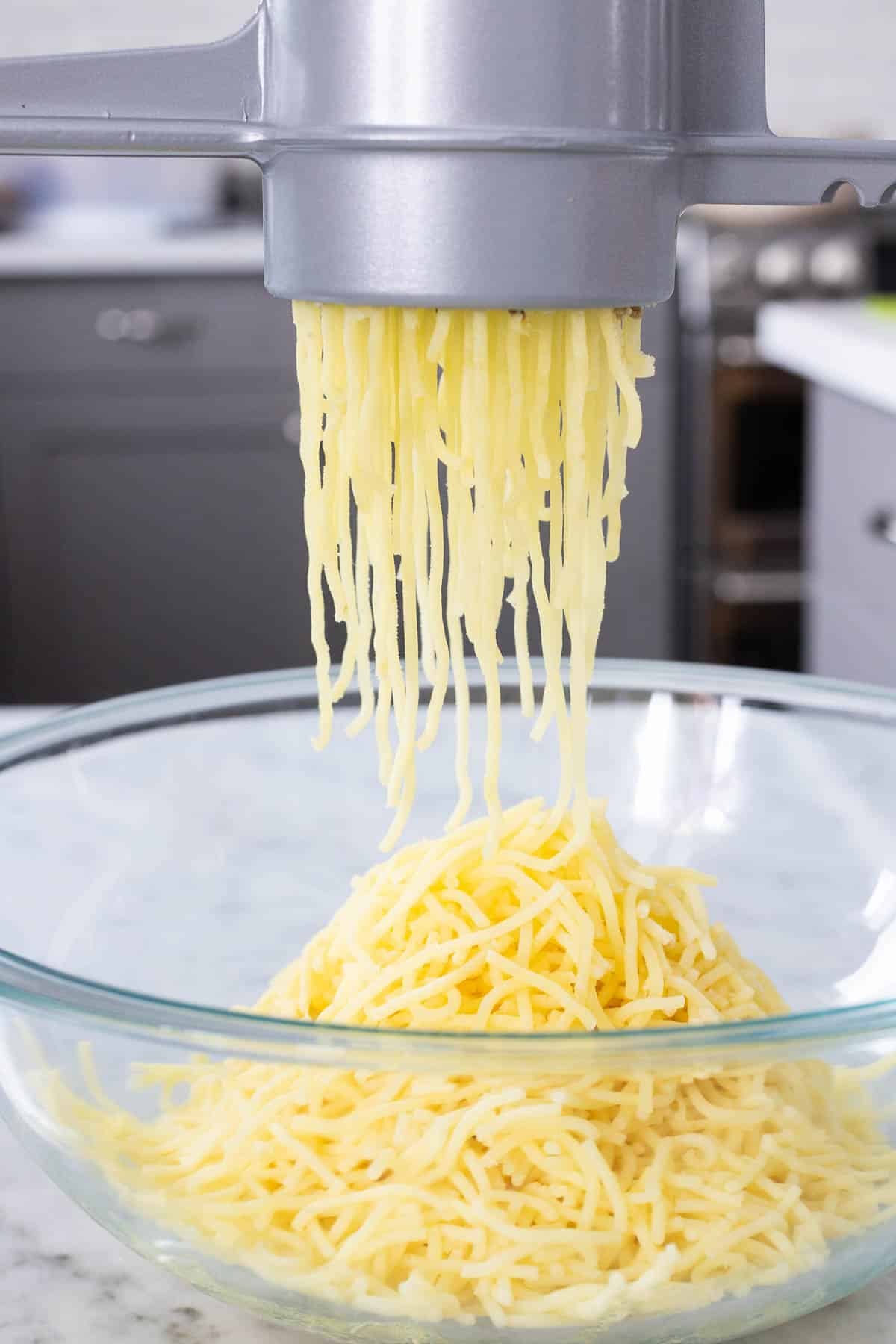
Step 2: Push the potatoes through a potato ricer.
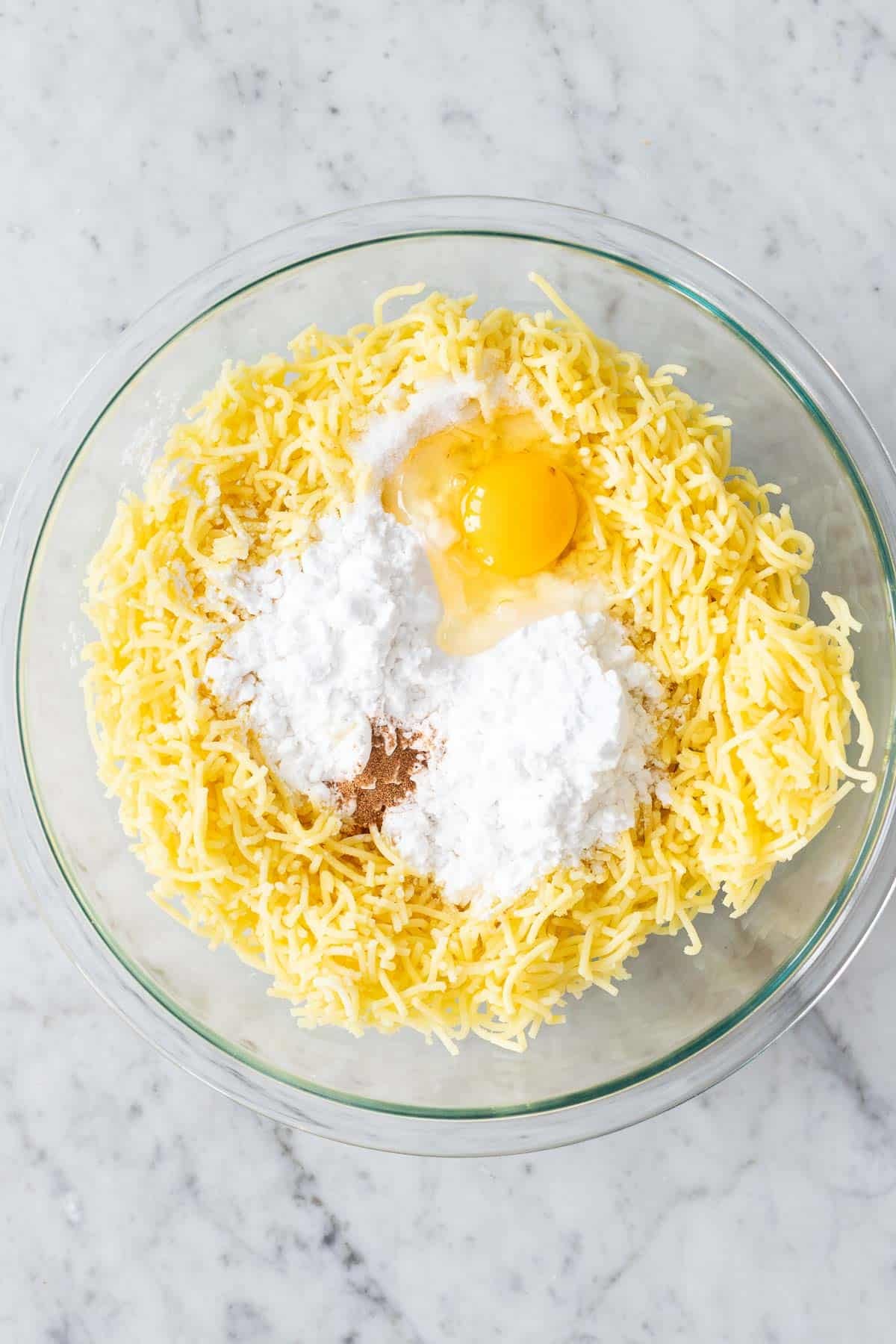
Step 3: Combine all the ingredients in a bowl.
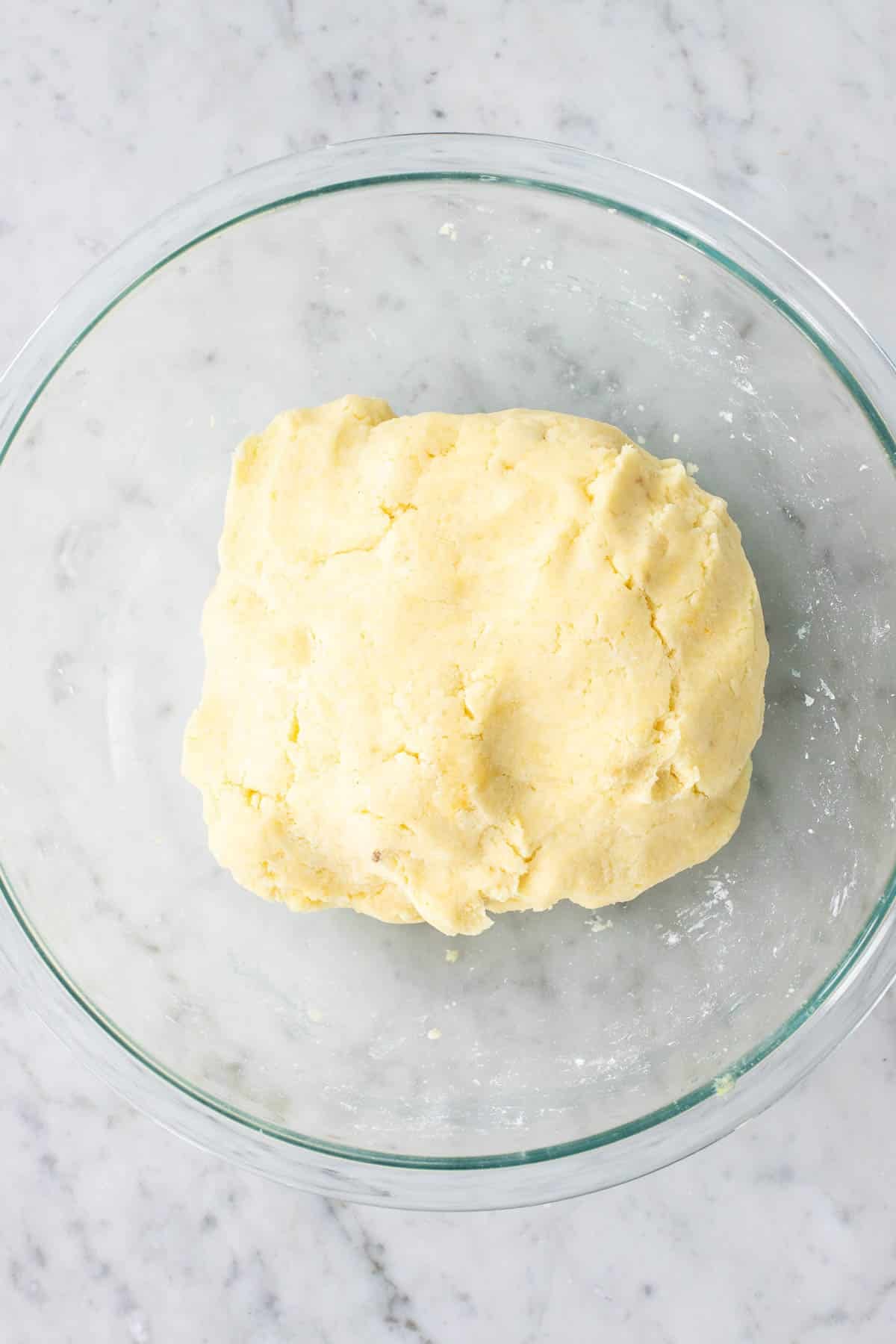
Step 4: Knead until a soft dough forms. Don’t overhandle the mixture.
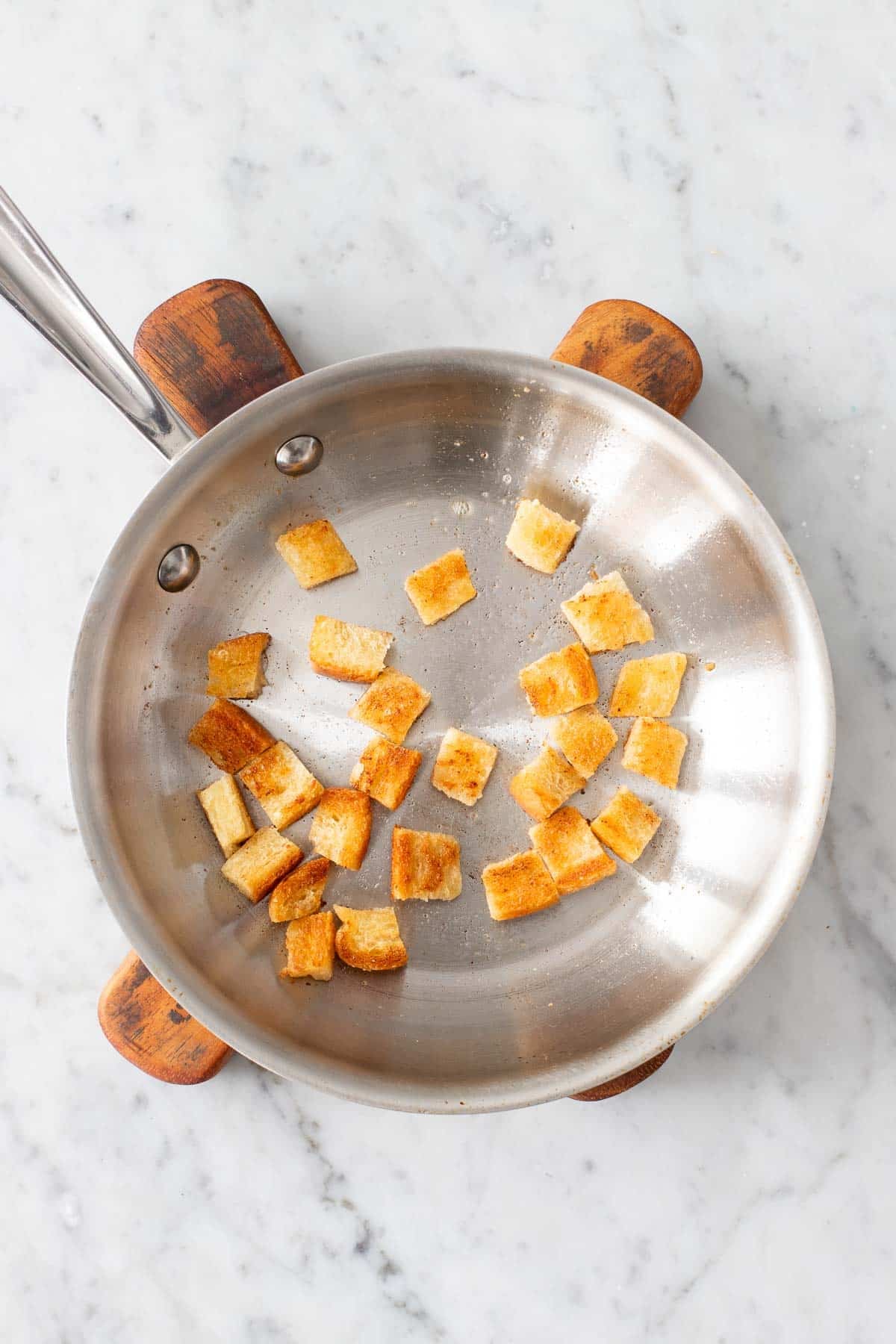
Step 5: Make the bread filling.
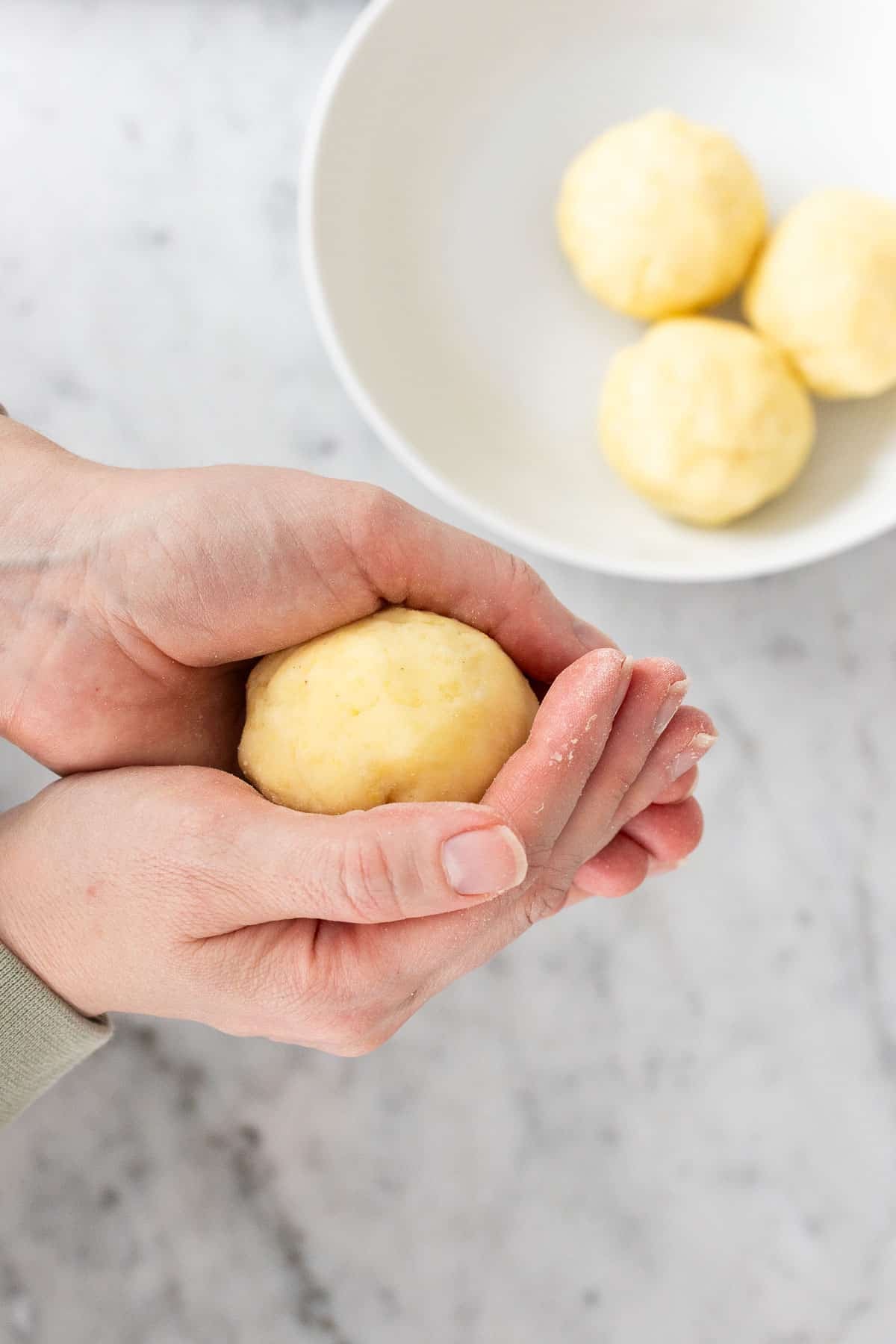
Step 6: Divide the dough and shape each portion into a round ball using the palms of your hands.
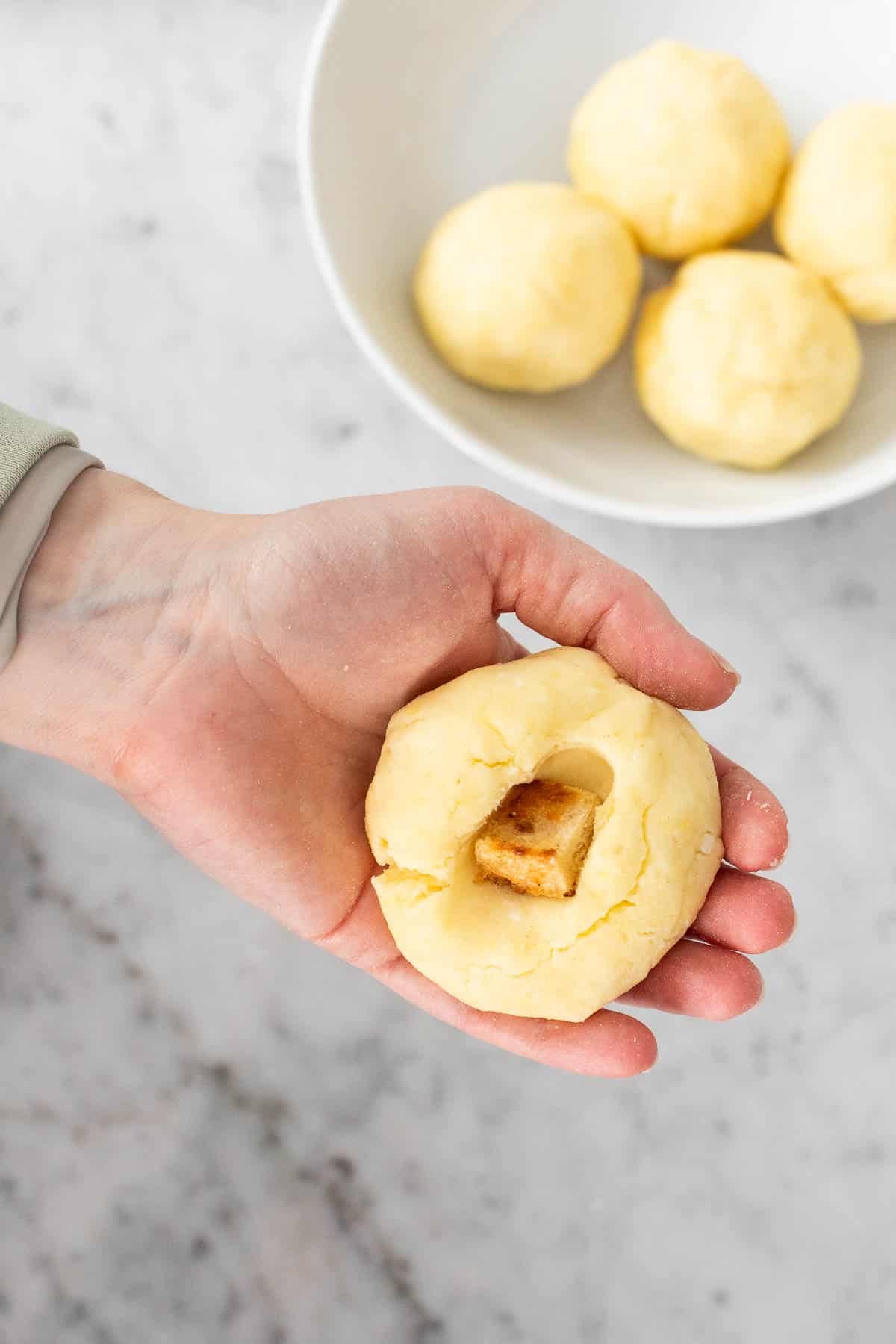
Step 7: To add the optional bread filling, flatten the ball, put a piece of bread in the center, and roll it into a ball again.

Step 8: You should have ten Knödel. Bring water in a large pot to a boil, then lower the temperature until the water is still.
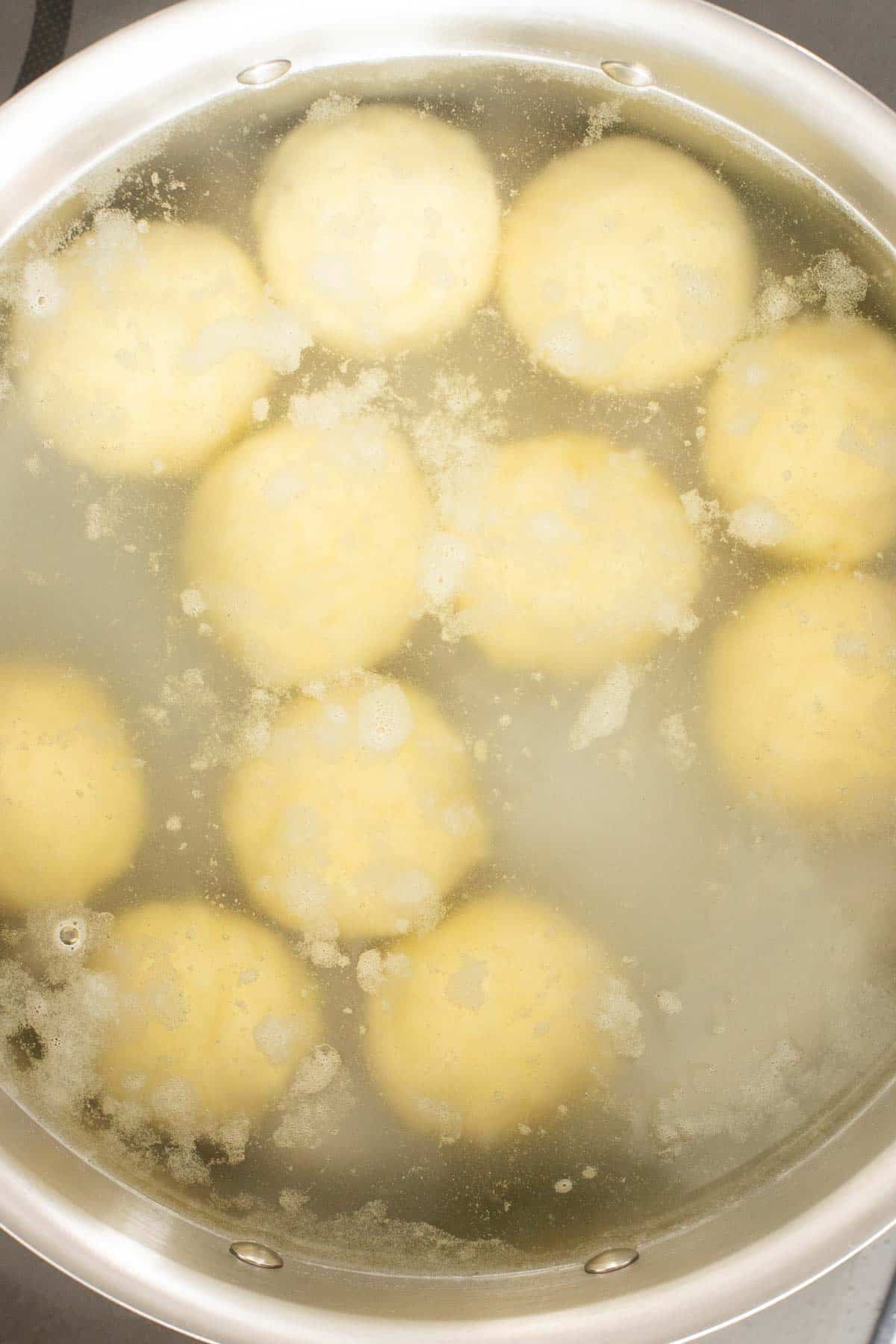
Step 9: Gently lower the Klöße into the hot water. Cook uncovered for about 20 minutes.
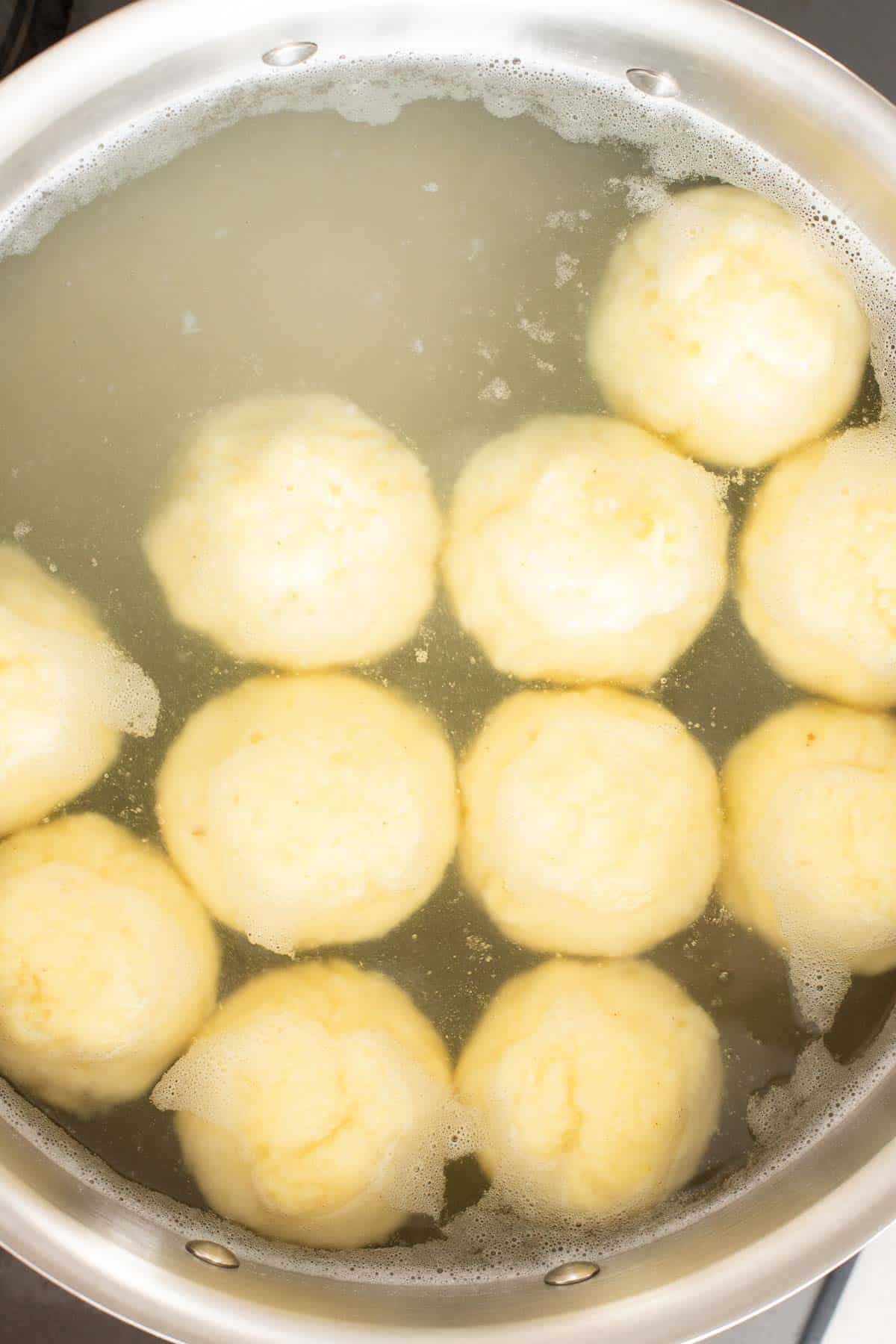
Step 10: The potato dumplings are done when they swim on the surface of the water and easily spin when nudged.
Serving Suggestions
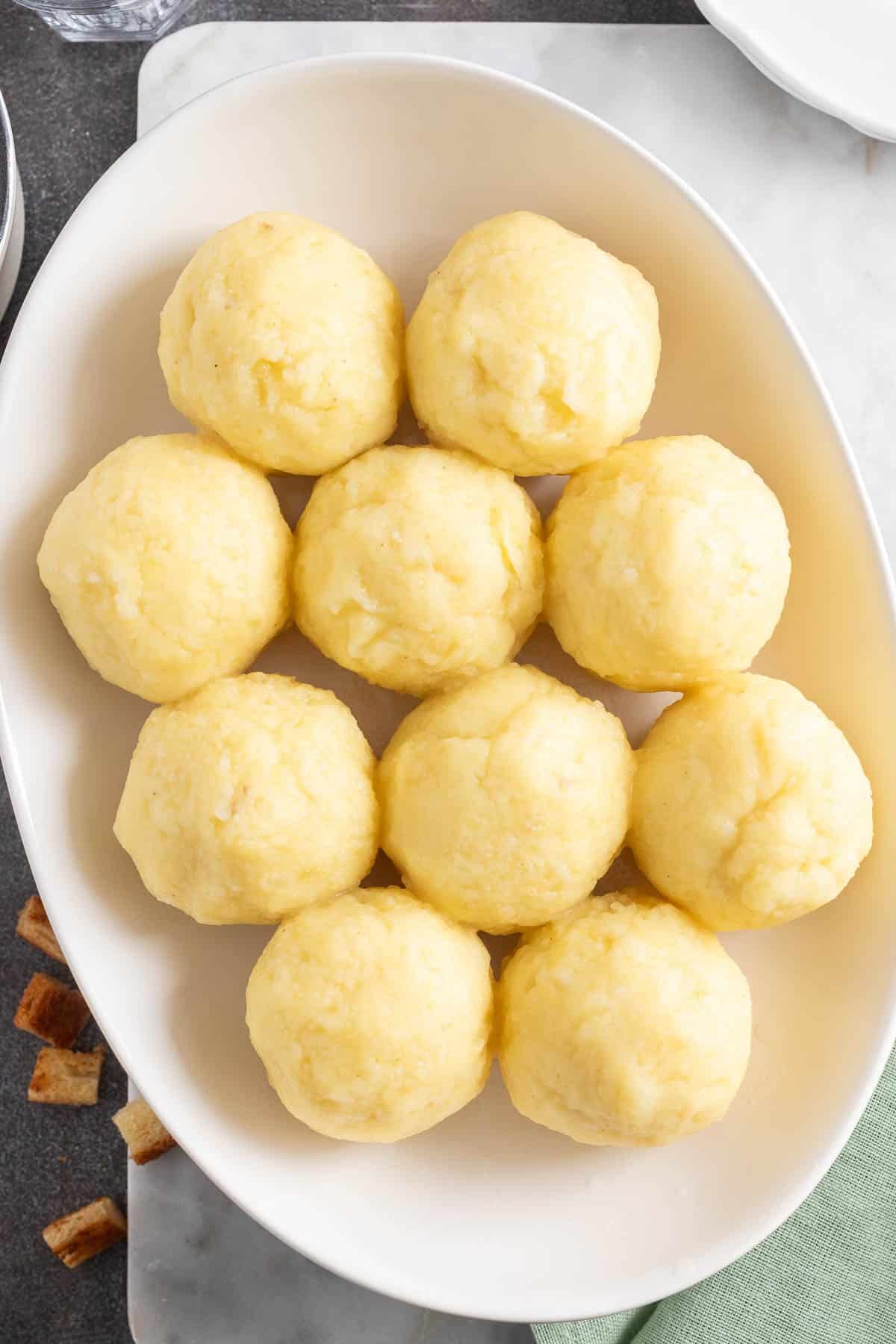
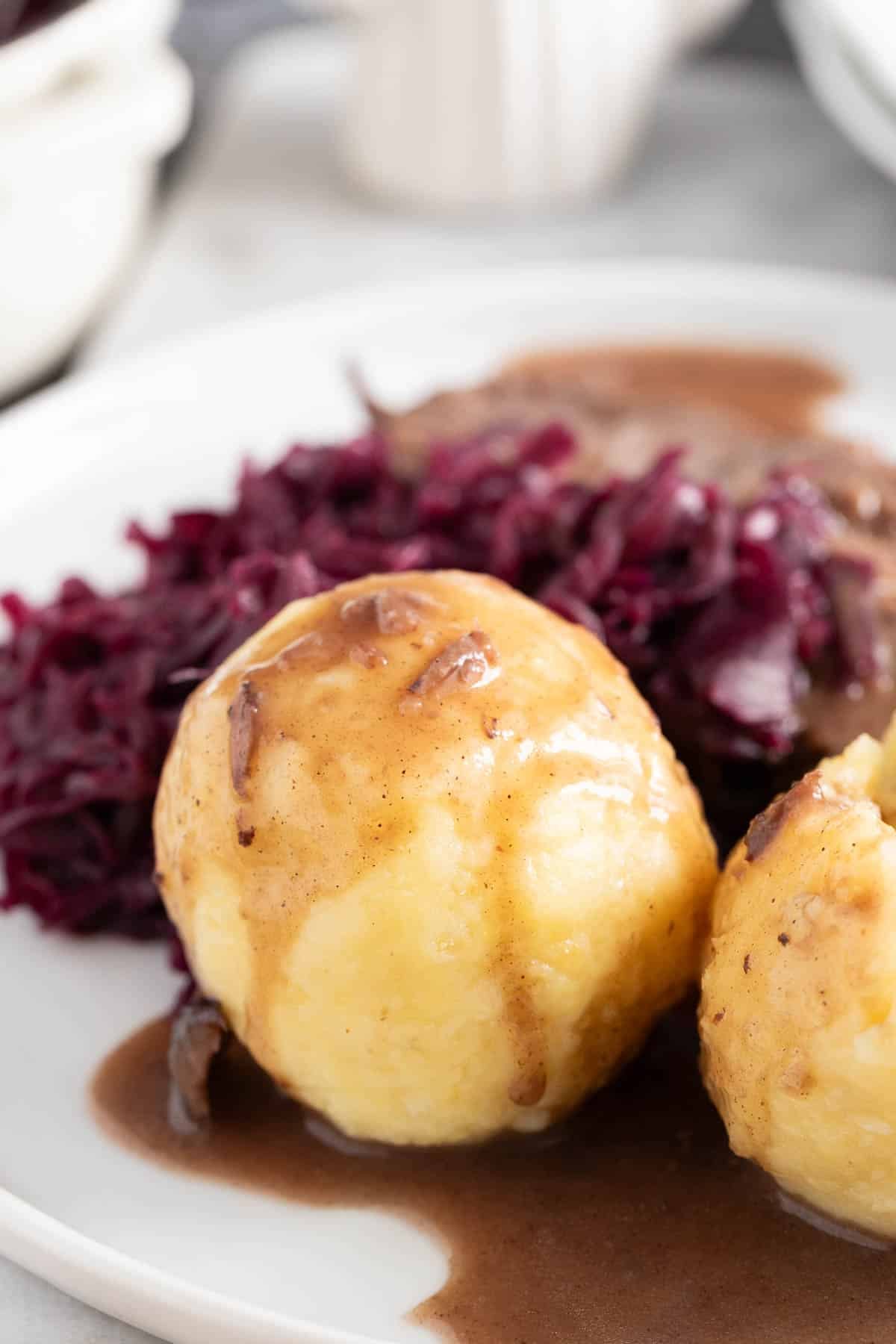
Kartoffelklöße taste best fresh, straight from the pot. Plan on two dumplings per person. They are a classic pairing for my German Sauerbraten, Rouladen (German beef rolls), or a classic German Schweinebraten, but everything served with a gravy works beautifully with dumplings.
The classic vegetable side dish to serve with them is German red cabbage (Blaukraut). You can make your own (it’s relatively simple, makes enough for several meals, and freezes beautifully) or get it at well-stocked supermarkets, usually in the aisle with the canned vegetables.
Storage & Freezing
Make-ahead: You can shape the dumplings up to a day in advance and store them in an airtight container in the fridge. Cook them as normal when you’re ready to eat. You could also just cook the potatoes ahead of time and store them in the fridge.
Store: Leftover dumplings keep in an airtight container in the fridge for up to 2 days. I actually love them the next day. We usually slice them and sauté them in butter in a pan until golden and slightly crispy. Sometimes we even add a whisked egg over them in the last minute. It’s a very popular German lunch called Gebratene Klöße! You could also reheat them in hot (not boiling!) water for about 10 minutes, but the texture won’t be quite as good as fresh.
Freeze (not recommended): You could freeze the shaped but uncooked dumplings on a baking sheet, then transfer them to a freezer bag. Cook them straight from frozen in hot, not boiling, water for 20-25 minutes. Just note this is a little risky; the dumplings can sometimes fall apart.
More German Recipes to Try
Cakes
Black Forest Cake
German Recipes
Kaiserschmarrn

German Recipes
Pfannkuchen

Main Dishes
German Schnitzel

Kartoffelkloesse (German Potato Dumplings)
Equipment
- potato ricer
Ingredients
For the dumplings:
- 2 lbs yellow potatoes
- 1 egg
- 1 cup potato starch
- 1½ teaspoons salt, plus more for the cooking water
- ⅛ teaspoon nutmeg
For the filling:
- 2 tablespoons butter
- 1 slice white bread
Instructions
- Cook the potatoes: Place the unpeeled potatoes in a large enough pot and cover with cold water. Bring to a boil with the lid on. Once boiling, add about 1 tablespoon of salt, reduce to medium heat so the water is just gently boiling, and cook for about 30 minutes until a knife slides through easily. Drain and let them steam for a moment.2 lbs yellow potatoes
- Rice the potatoes: Push the hot potatoes through a potato ricer into a large bowl (the peel stays in the ricer; remove it between each potato). Spread out the riced potatoes so they don't clump together, and let them cool for 15 minutes.
- Make the bread filling: Melt butter in a pan over medium heat. Cut the bread into small cubes (about ½ inch) and sauté until golden. Set aside.2 tablespoons butter, 1 slice white bread
- Make the dough: Add the egg, three-quarters of the potato starch, salt, and nutmeg to the bowl. Knead with your hands until the dough comes together smoothly; don't overknead the dough. If it's too sticky, knead in more potato starch.1 egg, 1 cup potato starch, 1½ teaspoons salt, ⅛ teaspoon nutmeg
- Shape the dumplings: Bring a large pot of water to a boil, add salt and then reduce to just below simmering (no bubbles). Meanwhile, with wet hands, divide the dough into 10 portions (about 100 g each). Roll into a ball, flatten each piece in your palm, place a bread cube in the center, and roll into a smooth, round ball.
- Cook the dumplings: Do a test dumpling first if this is your first time. Gently lower the dumplings into the hot (not boiling) water. Cook uncovered for about 20 minutes, stirring gently in the first couple of minutes so they don't stick to the bottom. They are done when they float to the surface and spin easily when nudged.
- Serve: Remove the dumplings with a slotted spoon and serve immediately.