This post may contain affiliate links.Please read our disclosure policy.
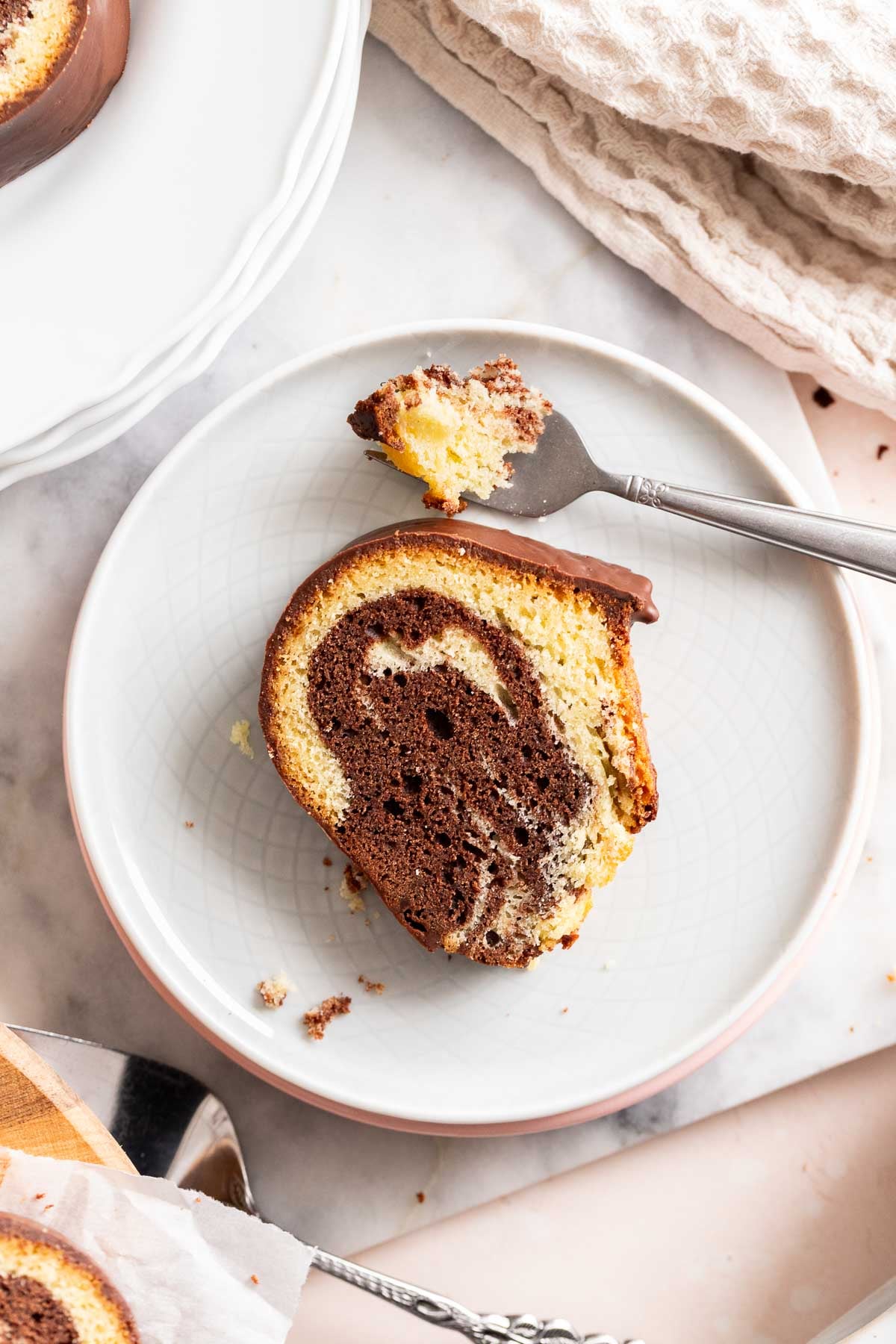
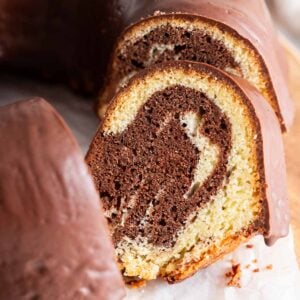
A classic German Marmorkuchen from my Oma’s handwritten recipe book. Buttery, tender swirled vanilla and cocoa marble cake with a shiny chocolate glaze. This simple marble cake is a popular birthday cake in Germany but also easy enough to make for everyday Kaffee und Kuchen.
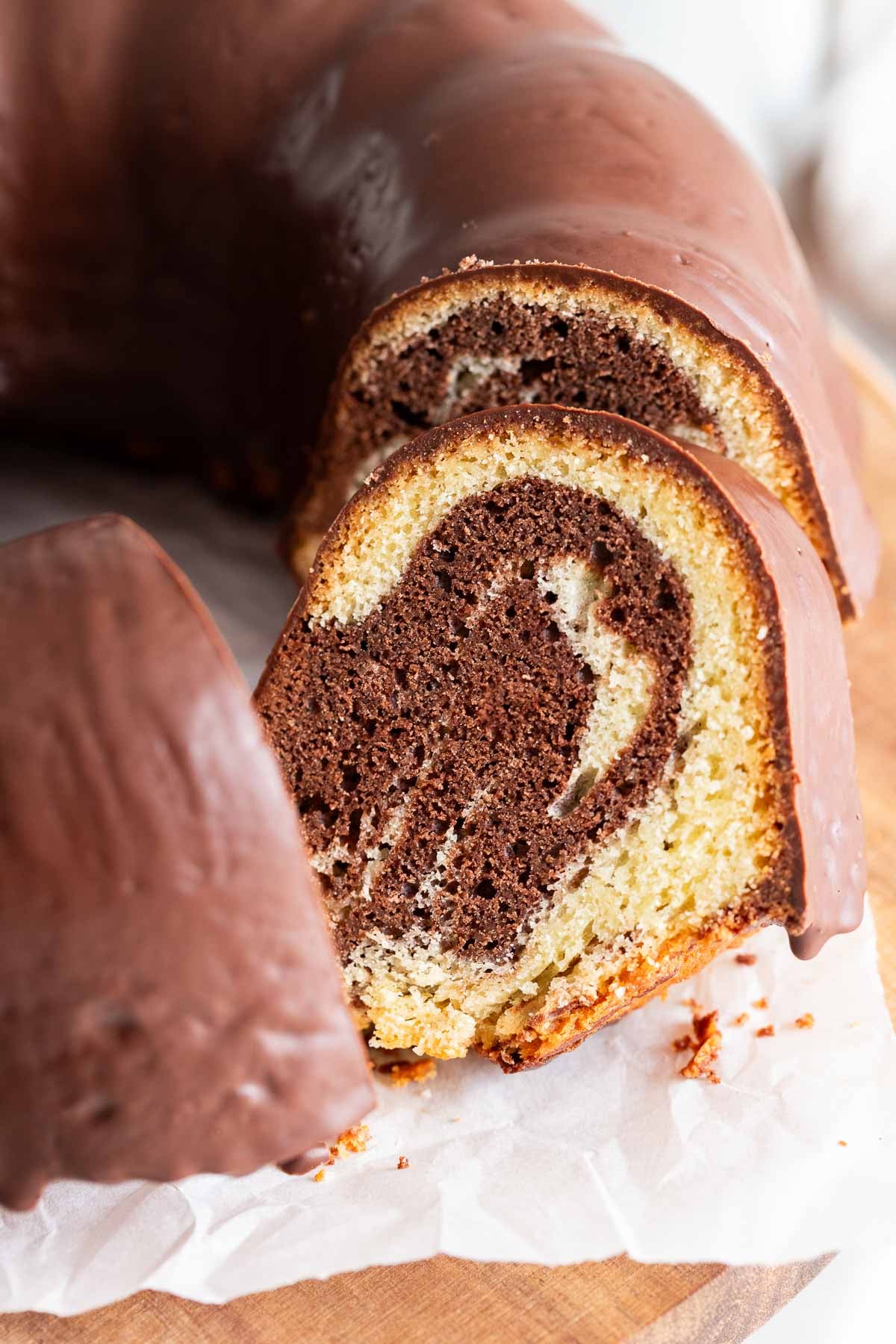
If you’ve ever had marble cake in the U.S., you probably had a layer cake with buttercream frosting. That’s not what Marmorkuchen is. In Germany, marble cake is an everyday Rührkuchen (stirred cake), the kind you throw together on a Sunday afternoon and eat with coffee.
The base for this recipe comes from my Oma’s old handwritten recipe book, which I got after she passed away. You can see it in one of the pictures below; it’s probably around 60 years old. I adapted her recipe slightly for a U.S. kitchen (imperial measurements, ingredients you can find here), but the taste is exactly like hers, and that gives me so much joy.
German Marmorkuchen is a bit denser than a typical American cake, closer to a muffin in texture. Buttery, not too sweet, with a good cocoa flavor running through it. It’s a great cake for everyday but also special occasions like birthdays because, just like my Versunkener Apfelkuchen (German apple cake), it can be made in advance and tastes even better on the second day.
Why Our Recipe
- From my Oma’s recipe book: This isn’t a recipe I found online. The base comes from my Oma’s handwritten collection, and I adapted it for American ingredients and measurements.
- Not too sweet: German Marmorkuchen emphasizes butter and cocoa flavor instead of sweetness. You actually taste the cake, not just sugar.
- Beginner-friendly: No separating eggs, no folding, no tricky techniques. If you can use a hand mixer, you can make this cake.
Key Ingredients (& Swaps)
Here is an overview of the ingredients you’ll need for this recipe. Scroll down to the recipe card at the bottom for quantities.
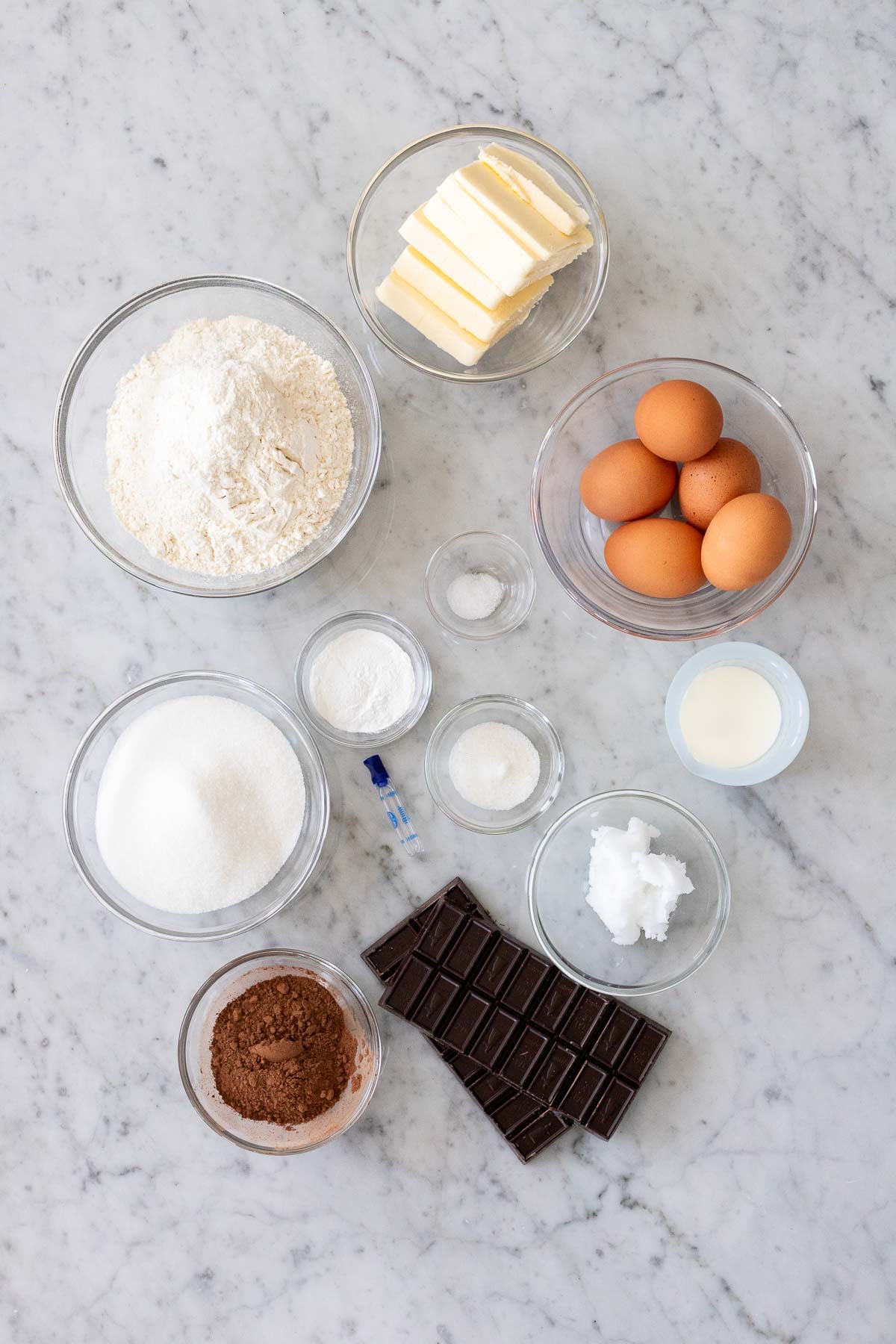
- Butter. Use unsalted butter at room temperature. This is a butter cake, so there’s no substitute here. Cold butter won’t cream properly, and margarine changes the texture completely.
- Vanilla sugar. In Germany, we use Vanillezucker (small packets of vanilla-infused sugar) instead of vanilla extract. If you can find it at a European store, use it. Otherwise, vanilla extract works fine. I also have a recipe for homemade vanilla sugar if you want to make your own.
- Rum (or rum aroma). A tablespoon of rum adds a subtle warmth without making the cake taste boozy. In Germany, we often use Rumaroma (rum flavoring) instead of real rum. You can find Rumaroma at most European grocery stores with the baking ingredients. You can also leave the rum out entirely if you prefer.
- Eggs. Five large eggs, room temperature. Adding them one at a time and mixing in between is what makes this cake moist and airy instead of dense. Don’t skip this step.
- Cocoa powder. I use Dutch-processed cocoa powder because that’s the standard in Germany and gives a deeper chocolate flavor. Sieve it before adding it to the batter so you don’t get dry clumps in the chocolate layer.
- Chocolate glaze. Semi-sweet chocolate melted with coconut oil. I recommend using quality semi-sweet chocolate and not chocolate chips. The coconut oil gives the glaze a nice shine, and it helps the cake stay moist for days. I prefer the chocolate glaze, but if you want to keep it easier, a powdered sugar dusting works too.
My Top Tips Before You Start
- Room-temperature ingredients. Pull the butter and eggs out of the fridge at least an hour before you start. Cold eggs can cause the batter to curdle, and cold butter won’t cream properly.
- Don’t overmix after adding the flour. Once the flour goes in, mix on low and stop as soon as the last streak of flour disappears. Overmixing makes the cake tough and dry.
- Sieve the cocoa powder. Cocoa powder clumps. If you add it straight from the container, you’ll end up with dry pockets in the chocolate batter.
- Bundt Pan. I make this recipe in a standard 10-cup Bundt pan. Not sure about yours? Fill it with water and measure. Note that silicone pans run slower than metal, so add about 8 minutes if you’re using silicone.
- The glaze keeps it moist. The chocolate-coconut oil glaze seals in moisture so the cake stays soft for days. If you skip it, the cake dries out faster.
- Heavy cream swap. For a richer cake, replace the milk with heavy cream. Same amounts, slightly more tender crumb.
How to marble a cake
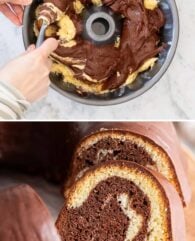
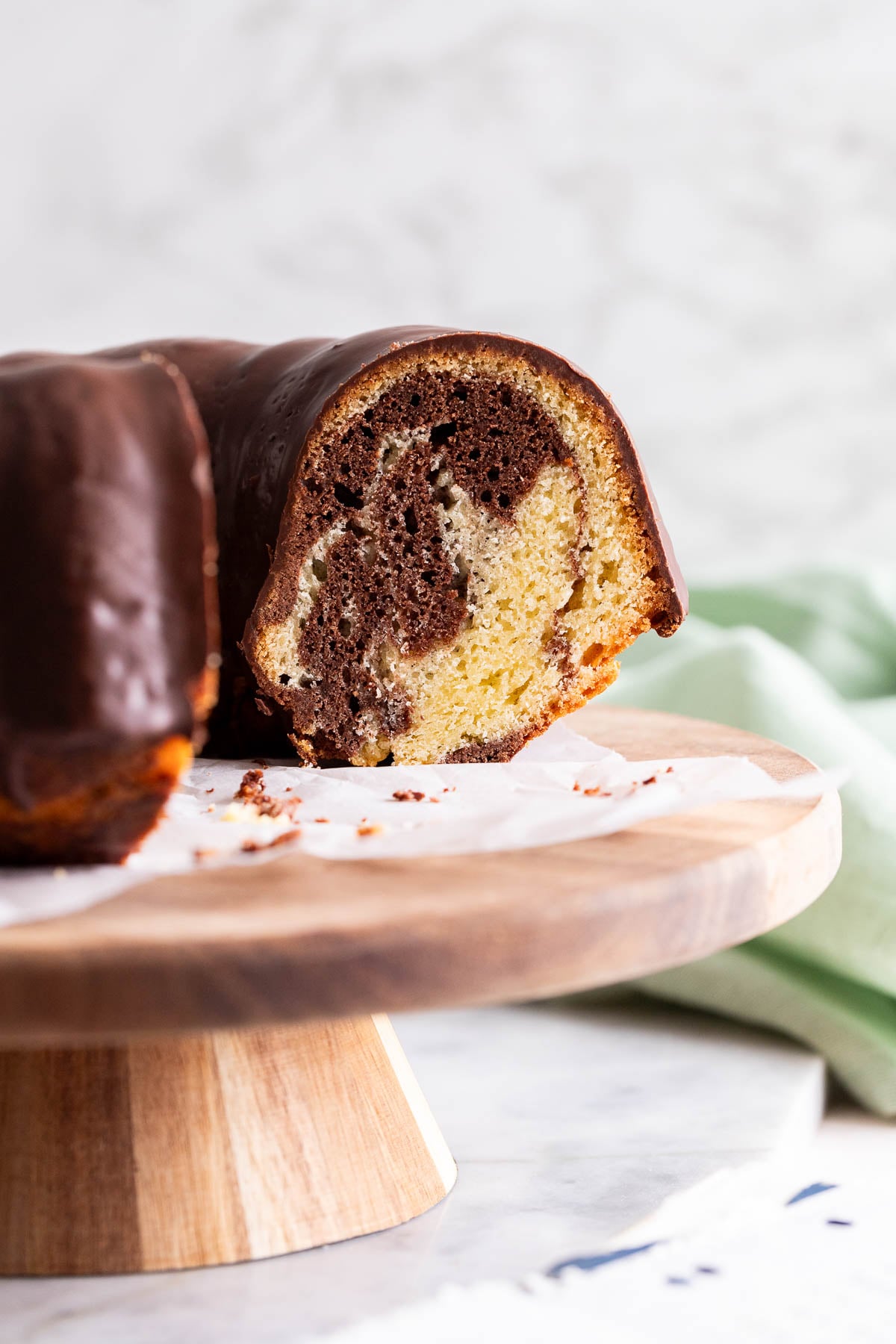
Use a fork or a butter knife and pull it through the batter in figure-eight motions, going from the bottom up. Four or five passes is enough. Stop there.
The goal is to swirl the two colors together while keeping them distinct. If you overwork it, the batters blend into a muddy brown, and the marble pattern disappears.
How to make Marmorkuchen
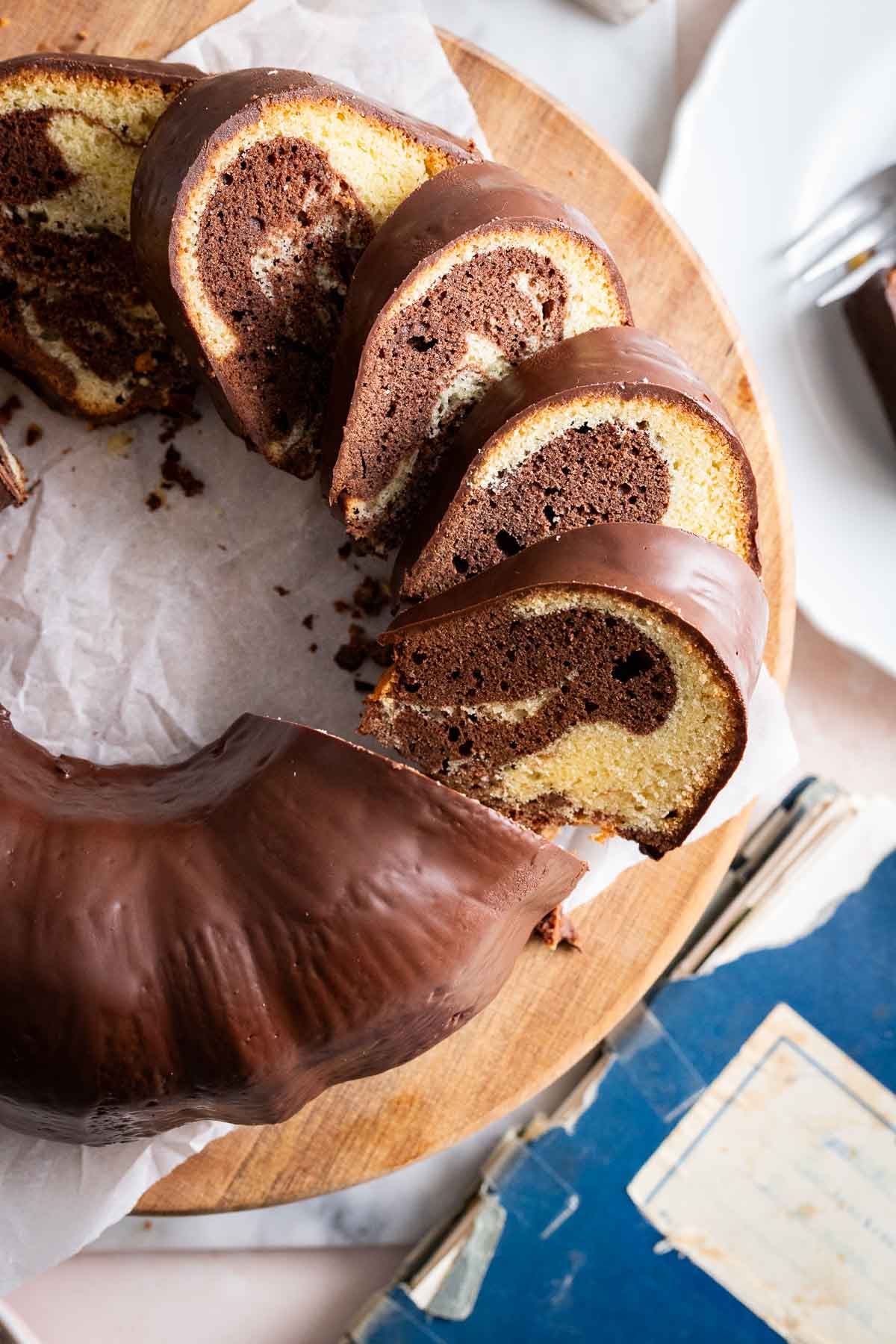
Here is a visual guide so you can see how to make this recipe step-by-step. Please note that these pictures are meant to provide a helpful visual overview of the recipe. Full measurements and detailed instructions are located in the printable recipe card at the bottom of this post.
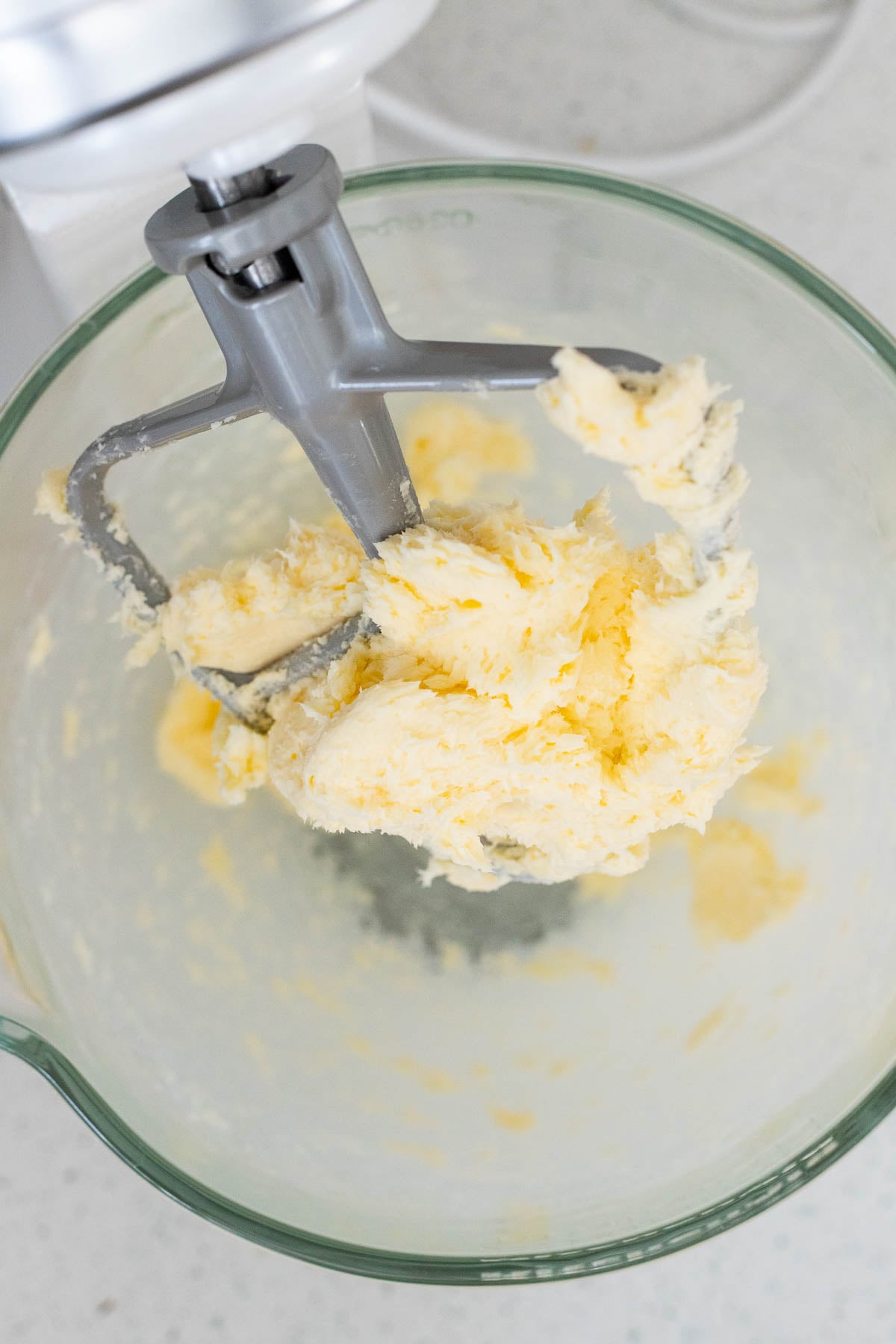
- Mix butter, sugar, vanilla, rum, and salt for 2 minutes until pale and combined.
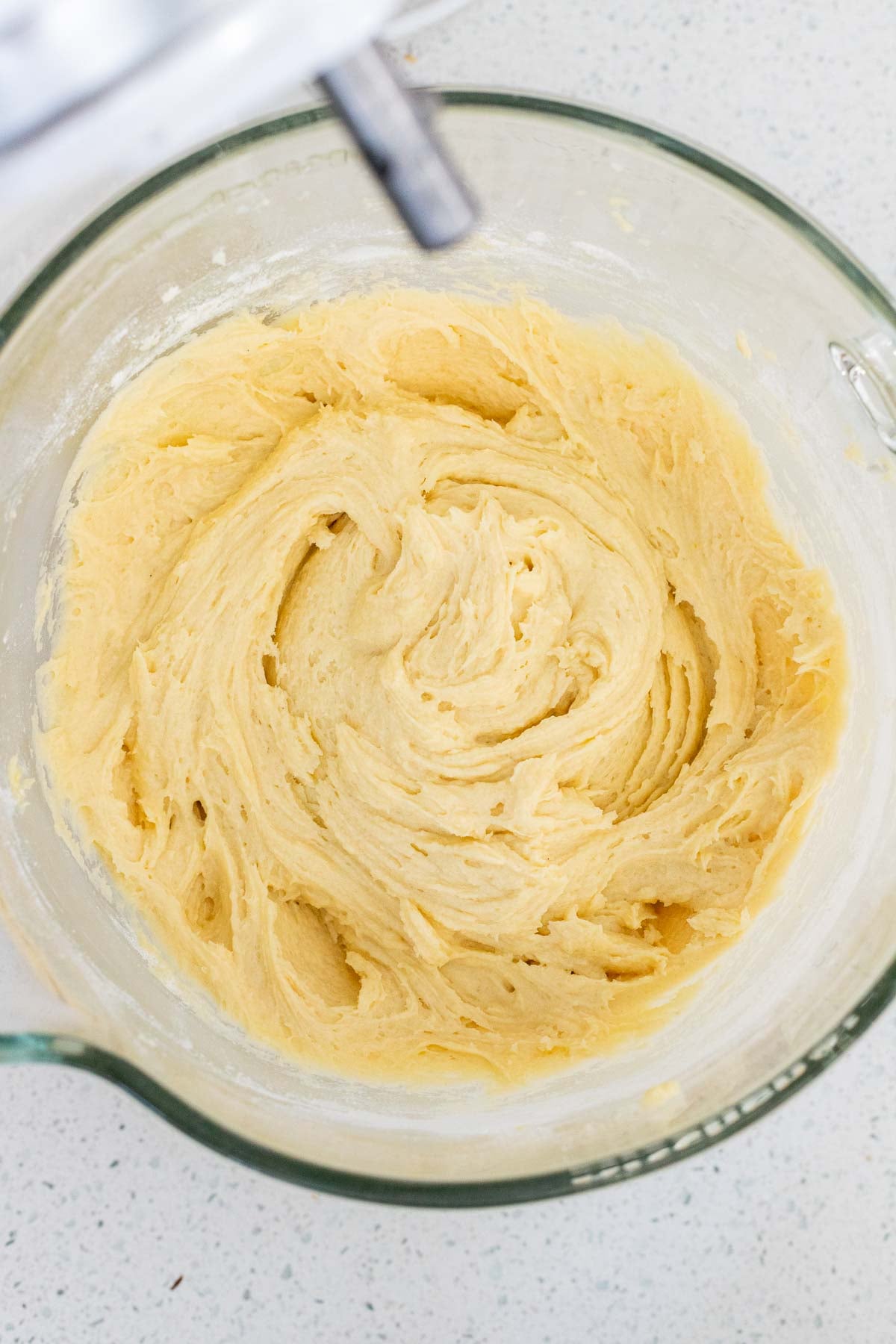
- Add one egg at a time, mixing 30 seconds between each addition. Then alternate adding the flour mixture and milk on low speed.
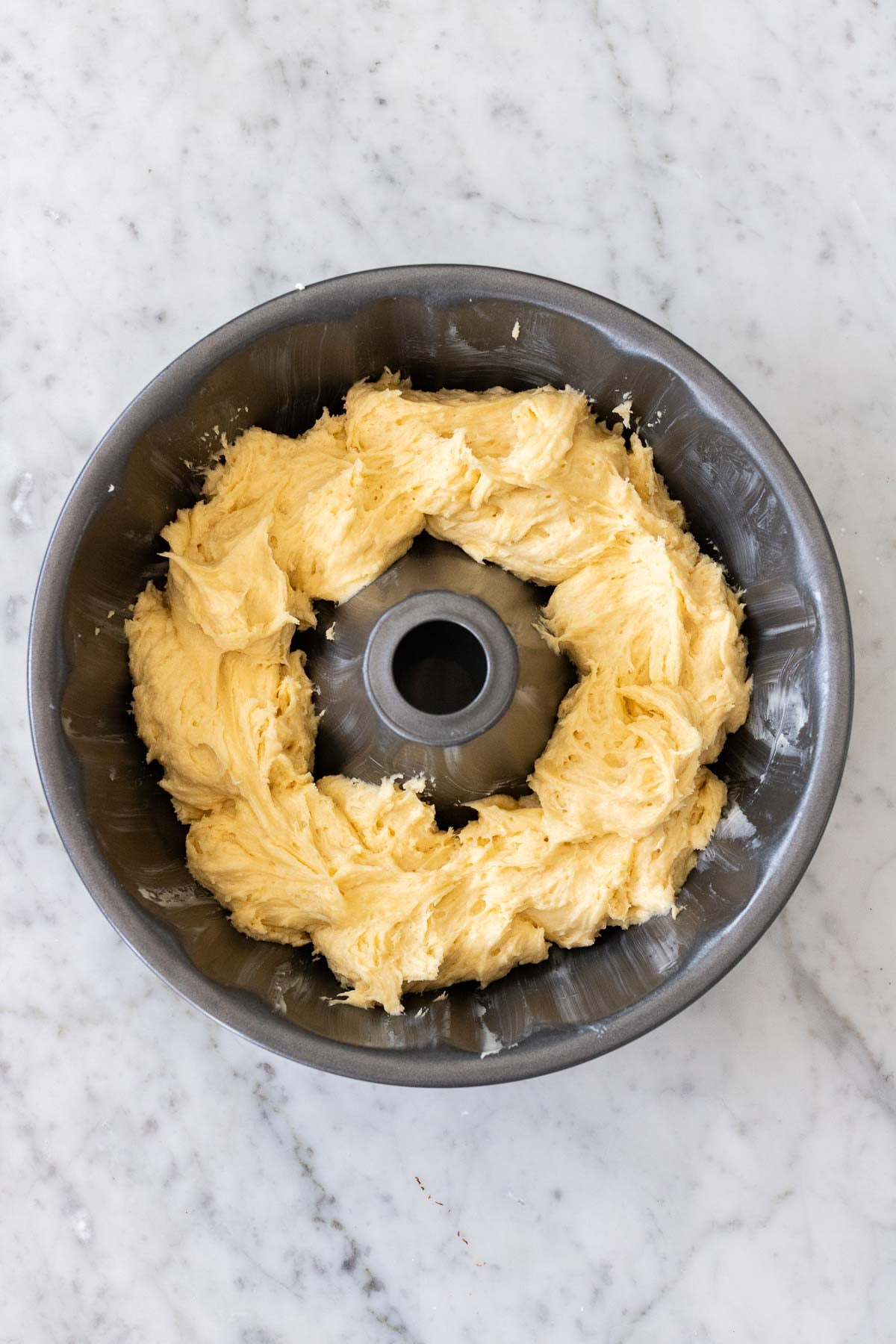
- Transfer 2/3 of the batter to the prepped 10-cup Bundt pan.
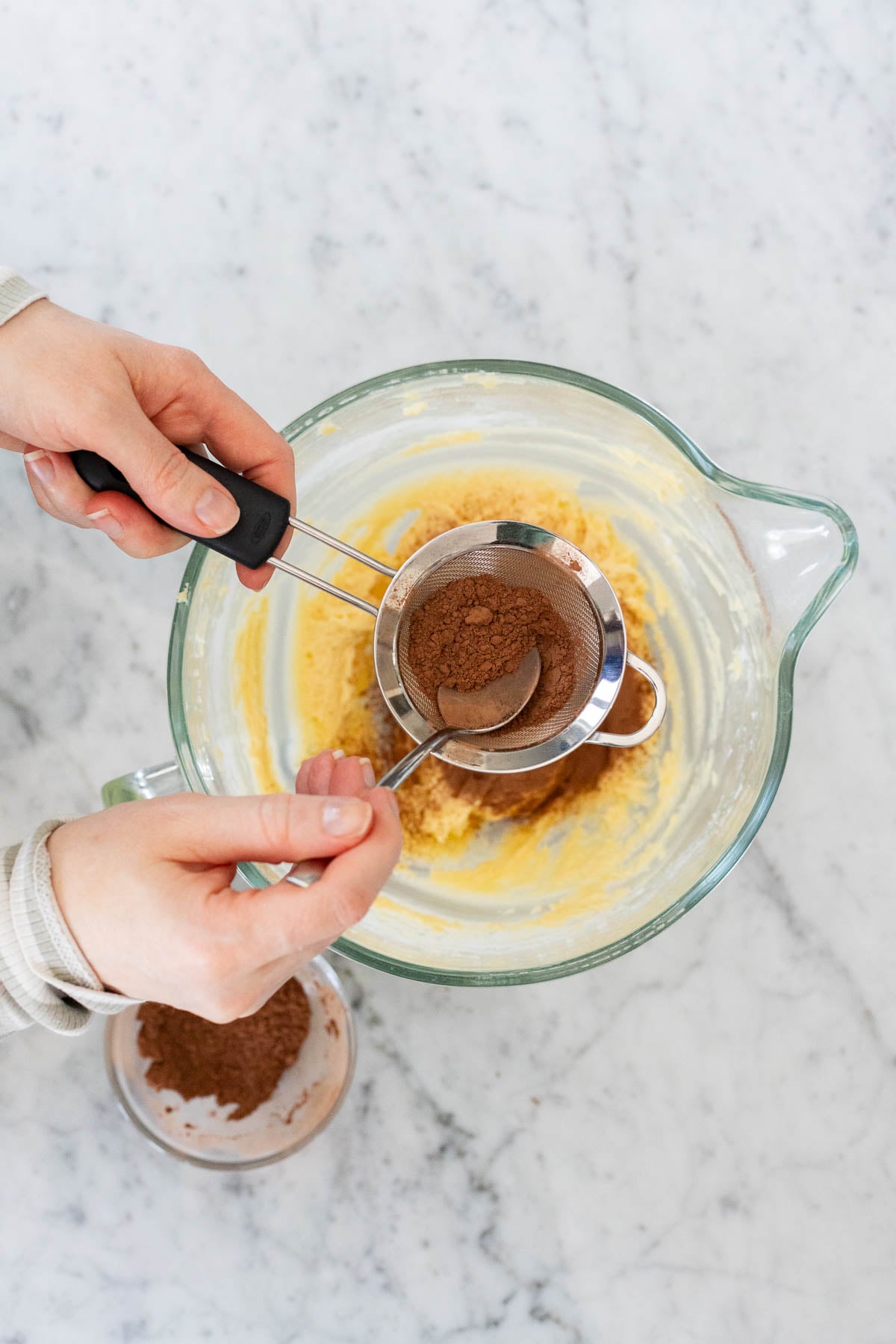
- Stir sieved cocoa powder and milk into the remaining 1/3.
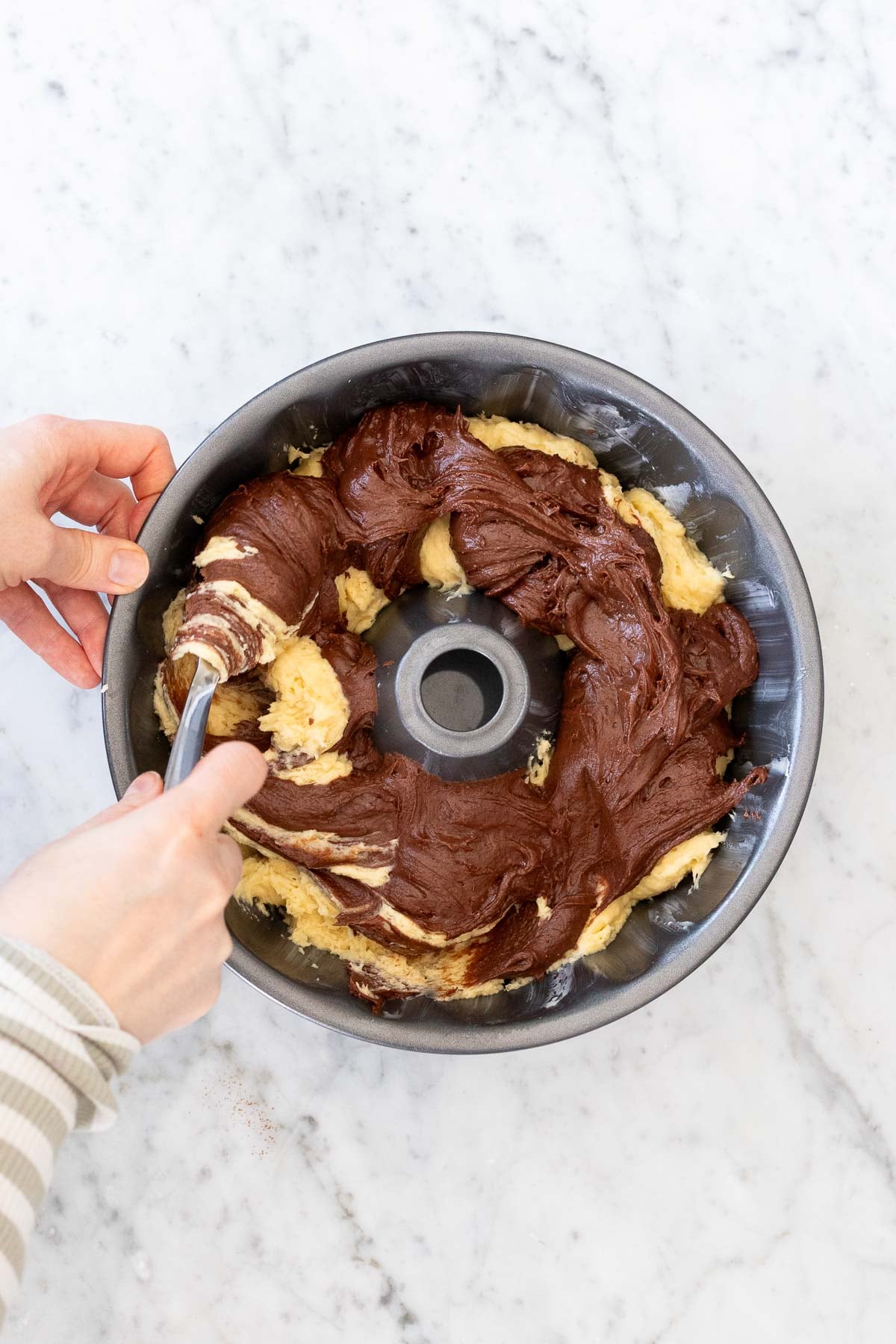
- Spoon the chocolate batter on top and swirl with a fork. A few passes are enough.
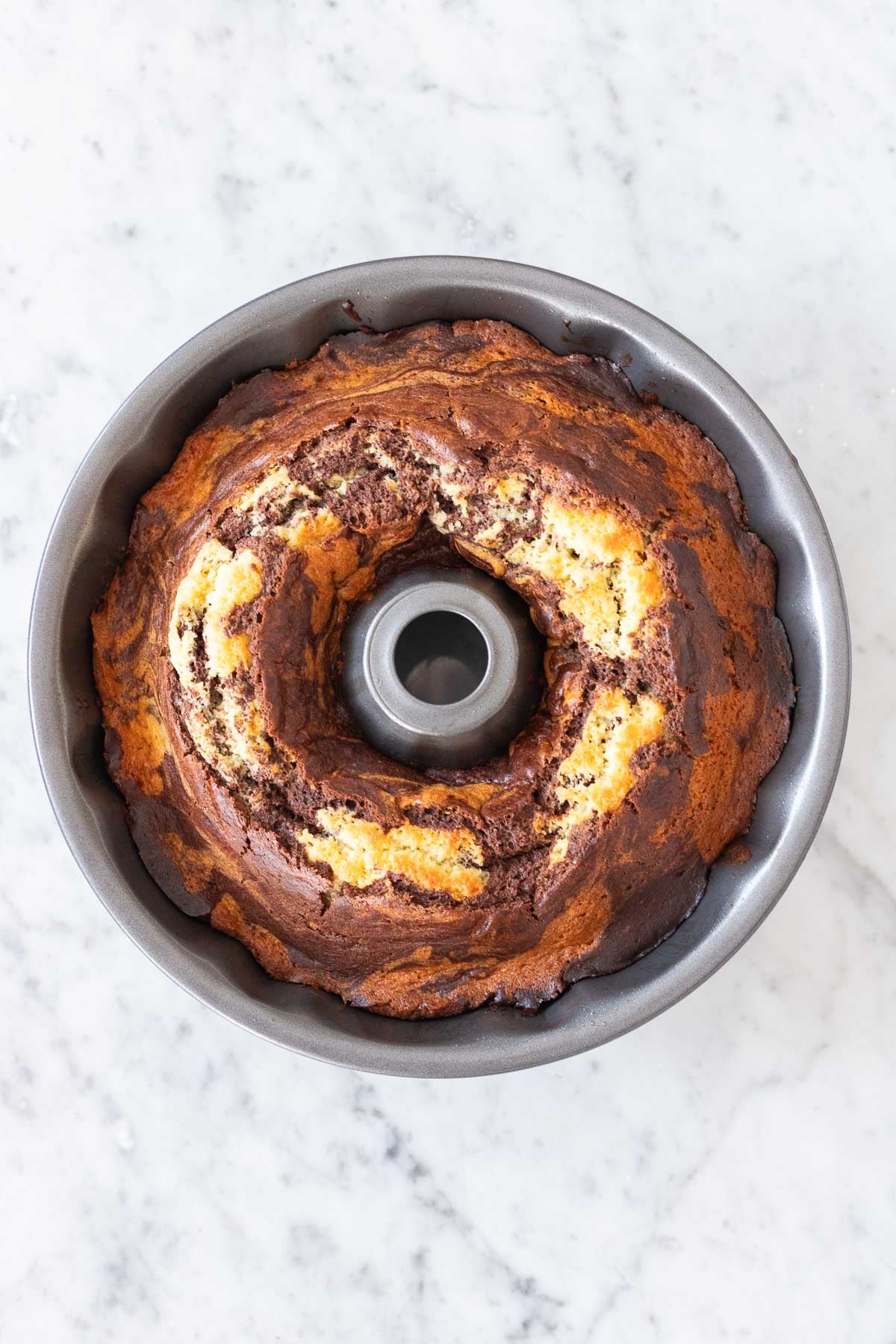
- Bake for 50 minutes or until a toothpick comes out clean.
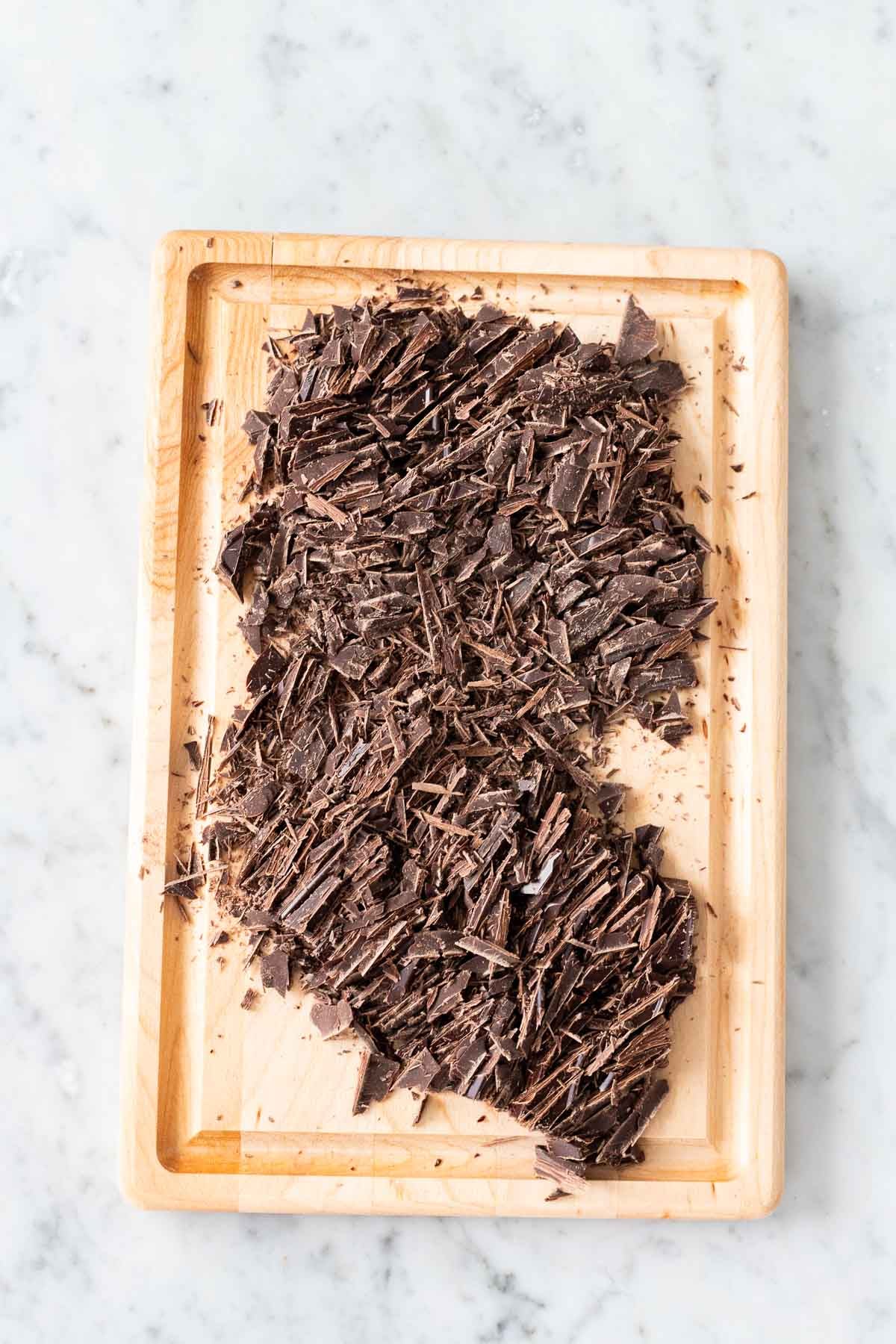
- Chop the chocolate and melt it together with the coconut oil.
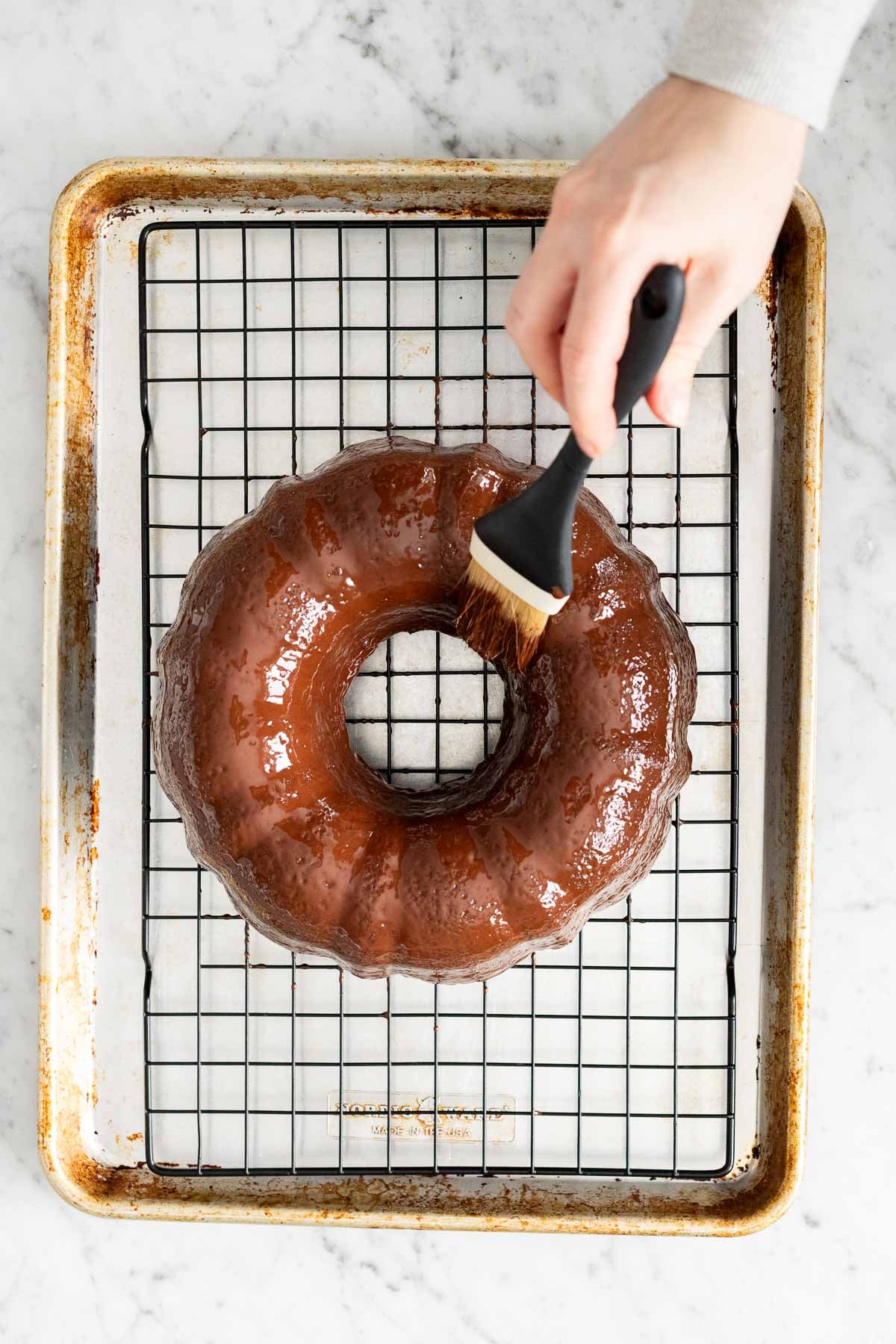
- Once fully cooled, brush with the chocolate glaze and let it set.
Frequently Asked Questions
Yes, you could. Use two 9×5 loaf pans instead of a bundt pan. Start checking for doneness around 40 minutes since the baking time will be slightly shorter.
I wouldn’t. The butter is the flavor. Oil makes it moist, but you lose the taste and texture that makes Marmorkuchen what it is.
In my experience, it’s almost always one of two reasons: overmixing after adding the flour or overbaking. Check the cake at 45 minutes since oven temperatures vary.
Yes, just leave it out. You can also substitute a teaspoon of lemon zest if you want a different flavor note.
American marble cake is usually a layer cake with buttercream frosting and is much sweeter. Marmorkuchen is a simple bundt cake, less sweet, with just a chocolate glaze (Schokoladenglasur) or powdered sugar on top.
Serving Suggestions
Marmorkuchen is a Kaffee und Kuchen cake, which is the German tradition of afternoon coffee and cake. Serve it in slices with a cup of coffee as an afternoon pick-me-up.
In Germany, Marmorkuchen is also a classic birthday cake, often decorated with sprinkles or gummy bears pressed into the glaze while it’s still wet. It’s a perfect cake for a special occasion because everyone loves it, it’s easy and fast to make even for a beginner, and it can be made a day in advance!
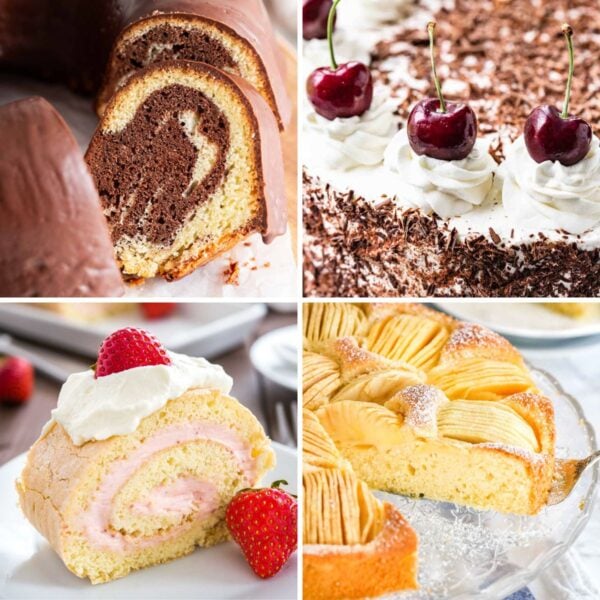
If you’re putting together a German baking spread, it pairs well with my German Cheesecake (Käsekuchen) or my German Plum Cake with Streusel.
Storage & Freezing
Make-ahead: Like most Rührkuchen, Marmorkuchen actually tastes better the next day once the flavors have settled. Bake it the day before you plan to serve it, add the glaze, and store it under a cake dome overnight at room temperature.
Store: It keeps for 4-5 days at room temperature. The chocolate glaze acts as a moisture seal, so the cake stays softer longer with it than without. Keep it in an airtight container or under a cake dome.
Freeze: Freeze the unglazed cake, wrapped tightly in plastic wrap and then foil, for up to 4 weeks. Thaw at room temperature, then add the glaze. I don’t recommend freezing it with the glaze already on.
More German Cake Recipes to Try
Marmorkuchen (German Marble Cake)
Equipment
- 10-cup Bundt pan
Ingredients
For the cake batter
- 1 ¼ cups unsalted butter, room temperature
- 1 ¼ cups granulated sugar
- 2 teaspoons vanilla extract, or 2 teaspoons vanilla sugar
- 1 tablespoon dark rum, or 8 drops rum extract
- ½ teaspoon salt
- 5 large eggs, room temperature
- 2 ½ cups all-purpose flour
- 4 teaspoons baking powder
- ¼ cup milk, room temperature
For the chocolate swirl
- 5 tablespoons Dutch-processed cocoa powder
- 2 tablespoons milk
For the chocolate glaze
- 6 oz semi-sweet chocolate, chopped
- 2 tablespoons coconut oil
Instructions
- Prep ingredients. Pull the butter, eggs, and milk out of the fridge at least 1 hour before you bake. (See note)
- Prep the pan and oven. Preheat to 360°F (180°C). Generously grease a 10-cup Bundt pan with soft butter, then dust with flour and tap out the excess.
- Cream the butter. In the bowl of a stand mixer fitted with the paddle attachment (or a large bowl with a hand mixer), beat the butter on medium until smooth, about 30 seconds.1 ¼ cups unsalted butter
- Add sugar, vanilla, rum, and salt. Beat on medium-high for 2 full minutes until the mixture looks pale and fluffy.1 ¼ cups granulated sugar, 2 teaspoons vanilla extract, 1 tablespoon dark rum, ½ teaspoon salt
- Add eggs one at a time. Crack in 1 egg, beat on medium-high for 30 seconds, then add the next. Repeat until all 5 are in. The batter should look smooth. If it curdles slightly, don't panic; it'll come back together once the flour goes in.5 large eggs
- Combine the dry ingredients. In a separate bowl, whisk the flour and baking powder together.2 ½ cups all-purpose flour, 4 teaspoons baking powder
- Alternate flour and milk. On low speed, add the flour in 3 parts and the milk in 2, starting and ending with flour. The batter will be thick. Do not overmix once the flour is in.¼ cup milk
- Divide the batter. Transfer about 2/3 of the batter (roughly 900 g if you have a scale) into the prepared Bundt pan.
- Make the chocolate batter. Sift the cocoa powder into the remaining 1/3 of the batter, add the milk, and mix until smooth and evenly brown.5 tablespoons Dutch-processed cocoa powder, 2 tablespoons milk
- Add and swirl. Dollop the chocolate batter in spoonfuls over the light batter. Take a fork (or a thin knife) and drag it through in 4–5 figure eights. Gently tap the pan several times on the countertop to dislodge any air bubbles and smooth the top of the batter with a spatula.
- Bake. Place on the middle rack and bake for 50 minutes. Start checking after 45 minutes. The cake is done when the top is deeply golden and a skewer inserted in the thickest part comes out with a few dry crumbs (not wet batter). If it's not done, give it another 5–10 minutes. If the top is browning too fast, tent loosely with foil.
- Cool. Let the cake rest in the pan for 10 minutes. Run a thin knife around the outer edge and the center tube, set a cooling rack on top of the pan, and flip in one confident motion. Let it cool completely, at least 1 hour, before glazing.
- Make the glaze. Chop the chocolate into small, even pieces. Combine with the coconut oil in a microwave-safe bowl. Microwave in 30-second bursts, stirring between each, until just melted and smooth. Usually 60–90 seconds total. Don't overheat, or the chocolate will seize. Let it sit for 2–3 minutes so it thickens slightly. You can also melt it in a double boiler on the stove over low heat.6 oz semi-sweet chocolate, 2 tablespoons coconut oil
- Glaze the cake. Brush or spoon the glaze over the cooled cake, letting it drip down the ridges. Let the chocolate set at room temperature for about 30 minutes before slicing.
Notes
- Forgot to take out the ingredients ahead of time? Cold ingredients are the #1 reason this batter curdles. If you forgot to take butter, milk, and eggs out in advance, here is a trick:
- Eggs: Let the eggs sit in a bowl of warm (not hot) water for 10 minutes
- Milk: Microwave for 15 seconds
- Butter: Cut the butter into small cubes (about 1/2 inch) and spread them out on a plate. Small pieces warm up in 15–20 minutes instead of the usual hour. Don’t microwave it; it’s too risky!
- No stand mixer? A hand mixer works. Just use a big bowl.
- No rum? Leave it out. The cake is still great.